
Introduction
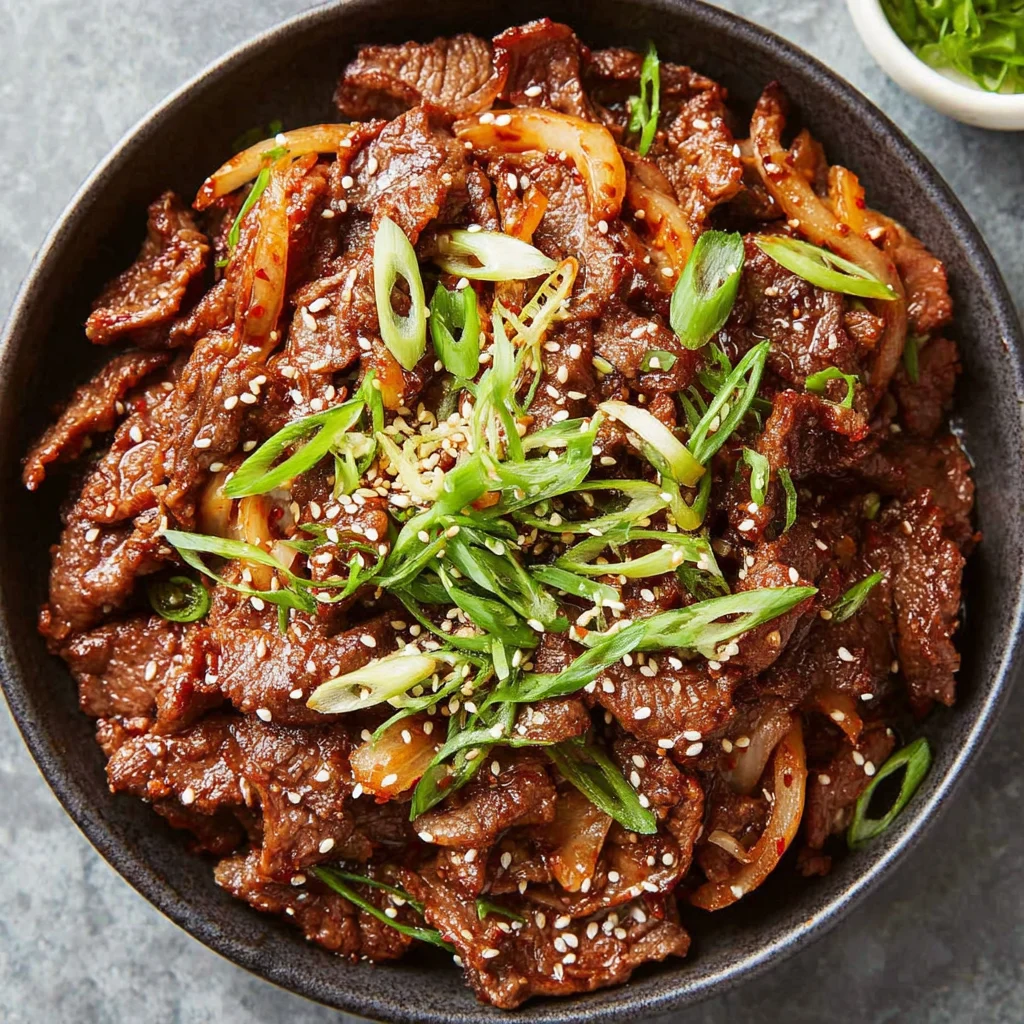
Growing up in my multicultural neighborhood, I’ll never forget the intoxicating aroma that would drift from Mrs. Park’s kitchen every Sunday afternoon. The sweet and savory scent of Korean Beef Bulgogi grilling would make my mouth water instantly. This traditional Korean BBQ dish features tender, marinated beef that practically melts in your mouth, delivering an explosion of umami flavors with every bite. What makes this bulgogi recipe truly special is its perfect balance of sweet pear and honey, salty soy sauce, and aromatic garlic and ginger that transforms ordinary beef into an extraordinary culinary experience.
Ingredients List
For the Bulgogi Marinade:
- 1 pound thinly sliced ribeye or sirloin (¼ inch thick)
- ⅓ cup soy sauce
- 2 tablespoons brown sugar
- 1 tablespoon honey
- 1 Asian pear, grated (substitute: 1 regular pear or 2 tablespoons apple juice)
- 4 cloves garlic, minced
- 1 tablespoon fresh ginger, grated
- 2 tablespoons sesame oil
- 1 tablespoon rice wine or mirin (substitute: dry sherry)
- 1 medium onion, thinly sliced
- 2 green onions, chopped
- 1 tablespoon toasted sesame seeds
For Cooking:
- 1 tablespoon vegetable oil
Substitution tip: If you can’t find Asian pear, regular Bartlett pear works perfectly, or try grated apple for a slightly different sweetness.
Timing
- Prep time: 15 minutes
- Marinating time: 30 minutes (or up to 24 hours)
- Cook time: 8 minutes
- Total time: 53 minutes
Time-saving tip: Marinate the beef overnight for deeper flavor penetration and easier weeknight cooking.
How to Make It
1. Prepare the Marinade Base
In a large mixing bowl, whisk together soy sauce, brown sugar, and honey until the sugar completely dissolves. The mixture should look glossy and smooth. Add the grated Asian pear, which acts as a natural meat tenderizer thanks to its enzymes. You’ll notice the marinade becoming slightly frothy—this is perfect and means the pear is working its magic to break down the meat fibers.
2. Build the Flavor Profile
Stir in minced garlic, grated ginger, sesame oil, and rice wine. The aroma should be incredibly fragrant at this point, with the sesame oil adding that distinctive nutty scent that’s essential to authentic bulgogi. Add the sliced onions and half the green onions, reserving the rest for garnish. This step creates the flavor foundation that will infuse every piece of beef.
3. Marinate the Beef
Add the thinly sliced beef to the marinade, making sure every piece is completely coated. Use your hands to gently massage the marinade into the meat—this helps the flavors penetrate deeper and ensures even coating. The beef should look glossy and well-coated. Cover and refrigerate for at least 30 minutes, though 2-4 hours yields even better results. The meat will darken slightly as it marinates, which is exactly what you want.
4. Cook the Bulgogi
Heat vegetable oil in a large skillet or grill pan over medium-high heat until it shimmers. Remove beef from marinade, letting excess drip off, but don’t pat it dry—you want some marinade clinging to the meat. Cook the beef in a single layer without overcrowding (work in batches if necessary). You’ll hear an immediate sizzle when the meat hits the hot pan. Cook for 2-3 minutes until the edges start caramelizing and turning golden brown.
5. Finish and Serve
Flip the beef and cook for another 2-3 minutes until just cooked through. The meat should be tender and slightly caramelized on both edges with a beautiful mahogany color. Don’t overcook—bulgogi is best when still slightly pink in the center. Sprinkle with remaining green onions and sesame seeds for garnish. The finished dish should be glossy, aromatic, and irresistibly savory-sweet.
Nutritional Information
Each serving (approximately 4 oz) contains roughly 280 calories, 24g protein, 12g carbohydrates, and 15g fat. Korean Beef Bulgogi provides excellent protein content along with beneficial compounds from garlic and ginger. Values are approximate and may vary based on specific ingredients used.
Serving Suggestions
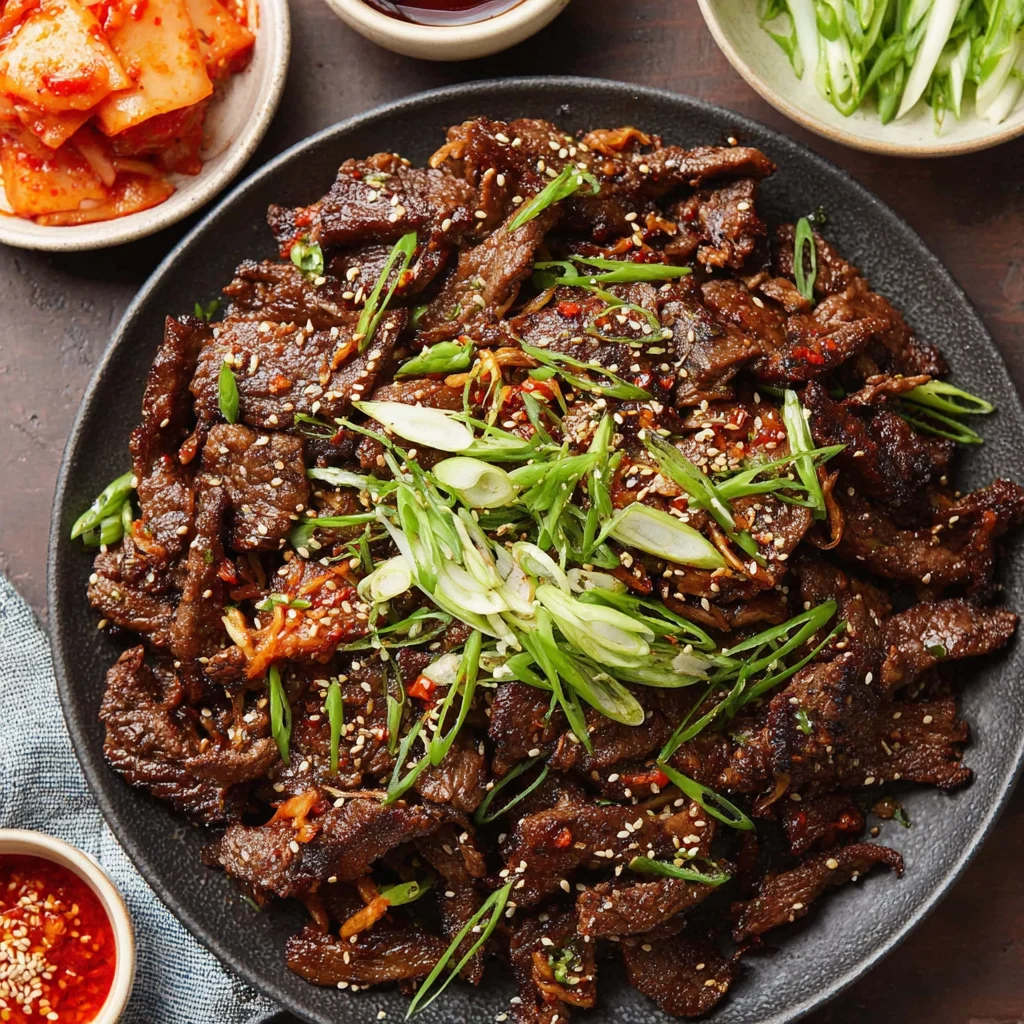
Serve bulgogi over steamed white rice or wrapped in butter lettuce cups for a lighter option. Pair with kimchi and pickled vegetables for an authentic Korean meal experience. This recipe serves 4 people generously as a main dish.
Common Mistakes to Avoid
Cutting meat too thick: Thin slices (¼ inch) are crucial for proper marination and quick cooking. Over-marinating: While longer is generally better, more than 24 hours can make the meat mushy. Overcrowding the pan: This creates steam instead of the desired caramelization. Skipping the pear: This natural tenderizer is essential for authentic texture and flavor.
Storing Tips
Store leftover bulgogi in the refrigerator for up to 3 days in an airtight container. For best results, reheat gently in a skillet over medium heat rather than microwaving, which can make the beef tough.
Conclusion
This Korean Beef Bulgogi recipe brings restaurant-quality flavors to your home kitchen with simple, accessible ingredients. The tender, caramelized beef with its perfect sweet-savory balance will quickly become a family favorite that you’ll crave again and again.
FAQs
Can I use a different cut of beef?
Yes! Sirloin, flank steak, or even thinly sliced chuck roast work well. The key is slicing against the grain for tenderness.
What if I don’t have Asian pear?
Regular pear, grated apple, or even 2 tablespoons of apple juice will provide similar tenderizing effects and sweetness.
Can I grill bulgogi outdoors?
Absolutely! Use a grill basket or foil packet to prevent small pieces from falling through the grates.
How thin should I slice the beef?
Aim for ¼ inch thickness. Partially freezing the beef for 30 minutes makes slicing much easier and more precise.
Is bulgogi spicy?
Traditional bulgogi is sweet and savory, not spicy. Add gochujang or red pepper flakes if you prefer heat in your dish.
For more delicious Korean-inspired dishes, check out our recipe collection on Pinterest for endless culinary inspiration.
Korean Beef Bulgogi
Ingredients
Method
- In a large mixing bowl, whisk together soy sauce, brown sugar, and honey until the sugar completely dissolves. The mixture should look glossy and smooth. Add the grated Asian pear, which acts as a natural meat tenderizer. The marinade should become slightly frothy.
- Stir in minced garlic, grated ginger, sesame oil, and rice wine. Add the sliced onions and half the green onions, reserving the rest for garnish. This creates the flavor foundation that will infuse every piece of beef.
- Add the thinly sliced beef to the marinade, making sure every piece is completely coated. Use your hands to gently massage the marinade into the meat. Cover and refrigerate for at least 30 minutes, though 2-4 hours yields even better results.
- Heat vegetable oil in a large skillet or grill pan over medium-high heat until it shimmers. Remove beef from marinade, letting excess drip off. Cook the beef in a single layer without overcrowding for 2-3 minutes until edges start caramelizing and turning golden brown.
- Flip the beef and cook for another 2-3 minutes until just cooked through. The meat should be tender and slightly caramelized with a mahogany color. Don’t overcook. Sprinkle with remaining green onions and sesame seeds for garnish.