
Introduction
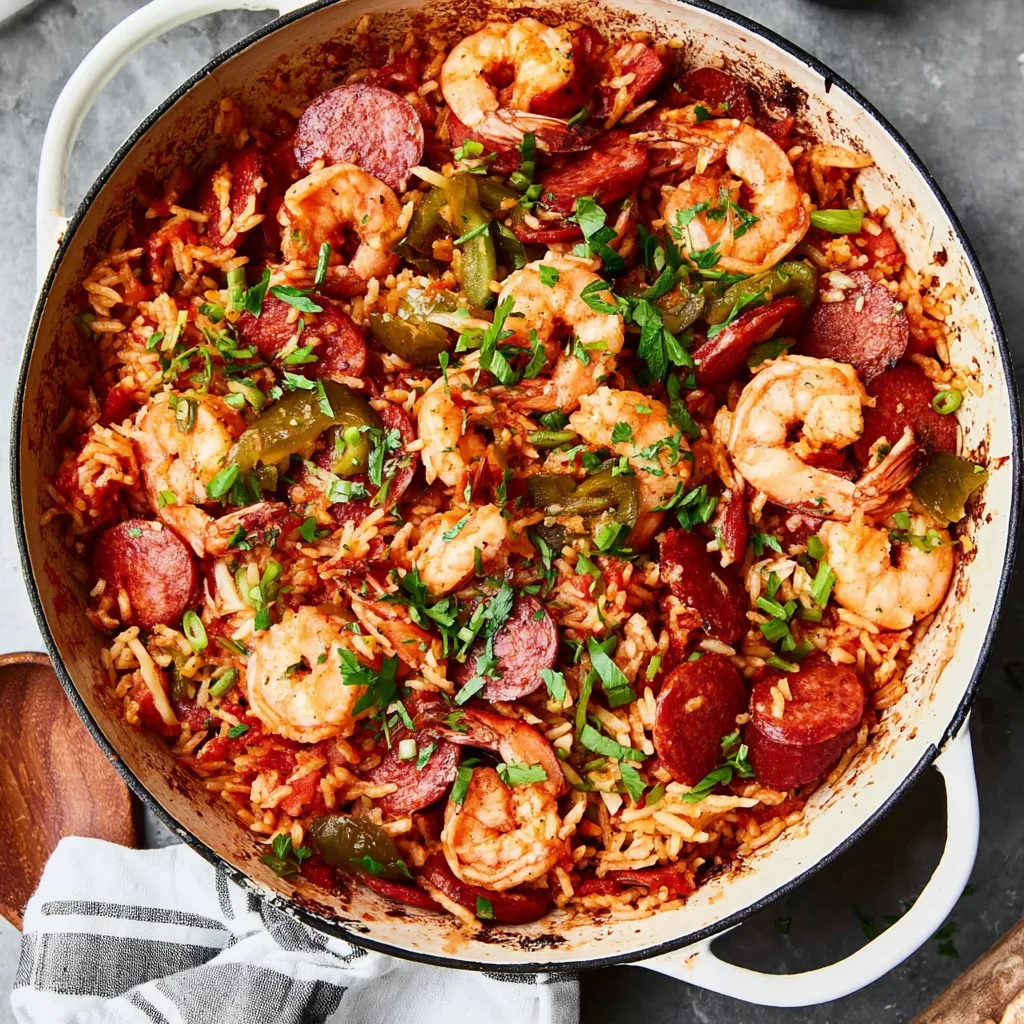
The aroma of this Mardi Gras Jambalaya instantly transports me back to my first visit to New Orleans, where I watched street vendors stir massive pots of this soul-warming dish while jazz music filled the air. This iconic Louisiana creation isn’t just a meal—it’s a celebration in a bowl, combining smoky andouille sausage, tender shrimp, and perfectly seasoned rice into one unforgettable dish.
What makes this Mardi Gras Jambalaya truly special is its incredible ability to bring people together. Unlike the more complex Creole version, this Cajun-style jambalaya cooks everything together in one pot, allowing the flavors to meld beautifully while the rice absorbs all those incredible spices. The result is a hearty, colorful dish that’s surprisingly easy to make at home, yet impressive enough for any festive gathering. Whether you’re planning a Mardi Gras party or simply craving comfort food with a kick, this jambalaya delivers authentic Louisiana flavors that’ll have everyone asking for seconds.
Ingredients List
This recipe serves 6 people and takes about 15 minutes to prepare. The beauty of jambalaya lies in its flexibility—you can easily adjust quantities based on your preferences or what’s available in your pantry.
Protein Foundation:
- 1 pound andouille sausage, sliced into rounds
- 1 pound large shrimp, peeled and deveined
- 1 pound boneless chicken thighs, cut into bite-sized pieces
Aromatic Base:
- 1 large yellow onion, diced
- 1 green bell pepper, diced
- 3 celery stalks, diced
- 4 garlic cloves, minced
- 2 tablespoons tomato paste
Rice and Liquid:
- 2 cups long-grain white rice, uncooked
- 4 cups chicken broth
- 1 can diced tomatoes, drained
Seasonings:
- 2 tablespoons Cajun seasoning
- 1 teaspoon smoked paprika
- 1 bay leaf
- 1/2 teaspoon dried thyme
- Salt and black pepper to taste
- 3 tablespoons vegetable oil
Fresh Finishes:
- 3 green onions, chopped
- 1/4 cup fresh parsley, chopped
- Hot sauce for serving
Substitution Notes: If andouille isn’t available, try kielbasa or smoked sausage. Vegetarians can replace all proteins with extra vegetables like mushrooms and okra. For gluten-free needs, ensure your sausage and seasonings are certified gluten-free.
Timing
This jambalaya comes together beautifully in about 45 minutes total. Plan for 15 minutes of prep time to dice your vegetables and prepare proteins, followed by 30 minutes of hands-on cooking time.
The beauty of this one-pot wonder is that most of the cooking happens while you’re stirring occasionally and letting the rice absorb all those incredible flavors. During the final 15 minutes of cooking, you’ll have time to prepare any sides or set the table.
Make-Ahead Tips: You can prep all vegetables and cut proteins up to a day ahead, storing them separately in the refrigerator. The complete dish also improves in flavor when made a few hours ahead and gently rewarmed before serving.
How to Make It
1. Brown the Proteins
Heat vegetable oil in a large, heavy-bottomed pot or Dutch oven over medium-high heat. Add the sliced andouille sausage first, cooking for 3-4 minutes until it develops a beautiful golden color and releases its smoky oils. Push sausage to one side, then add chicken pieces to the empty space. Season chicken with salt, pepper, and a sprinkle of Cajun seasoning, cooking for 5-6 minutes until golden on all sides. The proteins don’t need to be fully cooked at this stage—they’ll finish cooking with the rice.
2. Build the Aromatic Foundation
Add diced onion, bell pepper, and celery to the pot, stirring everything together. This holy trinity of Cajun cooking will create the flavor base for your jambalaya. Cook for 4-5 minutes until vegetables begin to soften and smell incredible. Add minced garlic and tomato paste, stirring constantly for another minute until fragrant. The tomato paste will darken slightly and coat the vegetables beautifully.
3. Toast the Rice and Add Seasonings
Pour the uncooked rice directly into the pot, stirring to coat each grain with the flavorful oil and vegetable mixture. This toasting step is crucial—cook for 2-3 minutes until you hear the rice sizzling and some grains turn slightly golden. Sprinkle in Cajun seasoning, smoked paprika, thyme, and add the bay leaf. The spices will become incredibly aromatic as they toast with the rice.
4. Add Liquids and Simmer
Pour in the chicken broth and drained diced tomatoes, stirring gently to combine. Bring the mixture to a rolling boil, then immediately reduce heat to low and cover the pot. Let it simmer for 18-20 minutes without lifting the lid—this allows the rice to steam properly and absorb all those incredible flavors. You’ll know it’s working when you hear gentle bubbling sounds.
5. Add Shrimp and Finish
After the rice has cooked for about 18 minutes, quickly lift the lid and nestle the shrimp into the rice mixture. Cover again and cook for 3-4 more minutes until shrimp turn pink and opaque. Remove from heat and let stand, covered, for 5 minutes to finish steaming. Remove the bay leaf, then gently fold in chopped green onions and fresh parsley.
Nutritional Information
Each generous serving of this Mardi Gras Jambalaya provides approximately 420-450 calories, making it a satisfying and well-balanced meal. The combination of lean protein from shrimp and chicken, along with the complex carbohydrates from rice, creates a dish that keeps you satisfied for hours.
This jambalaya is naturally rich in protein, providing about 28-30 grams per serving from the trio of seafood, poultry, and sausage. The dish also offers important nutrients like selenium from the shrimp, B-vitamins from the chicken, and vitamin C from the bell peppers and tomatoes.
The rice provides steady energy, while the vegetables contribute fiber and antioxidants. The spices, particularly paprika and garlic, offer additional antioxidant benefits. Keep in mind that nutritional values can vary based on specific brands of ingredients used and portion sizes.
For those watching sodium intake, this dish does contain a moderate amount due to the sausage and seasoning blend, so consider using low-sodium broth and reducing added salt if needed.
Healthier Alternatives for the Recipe
Transform this classic jambalaya into a lighter version by swapping the andouille sausage for turkey andouille or chicken sausage, which typically contains less fat while maintaining that essential smoky flavor. You can also increase the shrimp-to-sausage ratio for more lean protein.
Lower Carb Options: Replace half the rice with cauliflower rice, adding it during the last 10 minutes of cooking. This reduces calories while adding extra vegetables to your meal.
Heart-Healthy Modifications: Use brown rice instead of white rice for added fiber and nutrients—just increase the cooking liquid by about 1/2 cup and extend cooking time by 10 minutes. Choose low-sodium chicken broth and reduce the amount of added salt.
Vegetarian Version: Create a satisfying plant-based jambalaya using plant-based sausage, extra mushrooms, and additional vegetables like okra and diced eggplant. Add the vegetables in stages based on their cooking times to ensure perfect texture.
Gluten-Free Assurance: This recipe is naturally gluten-free when you use certified gluten-free sausage and seasonings. Always check labels on processed ingredients to be certain.
Serving Suggestions
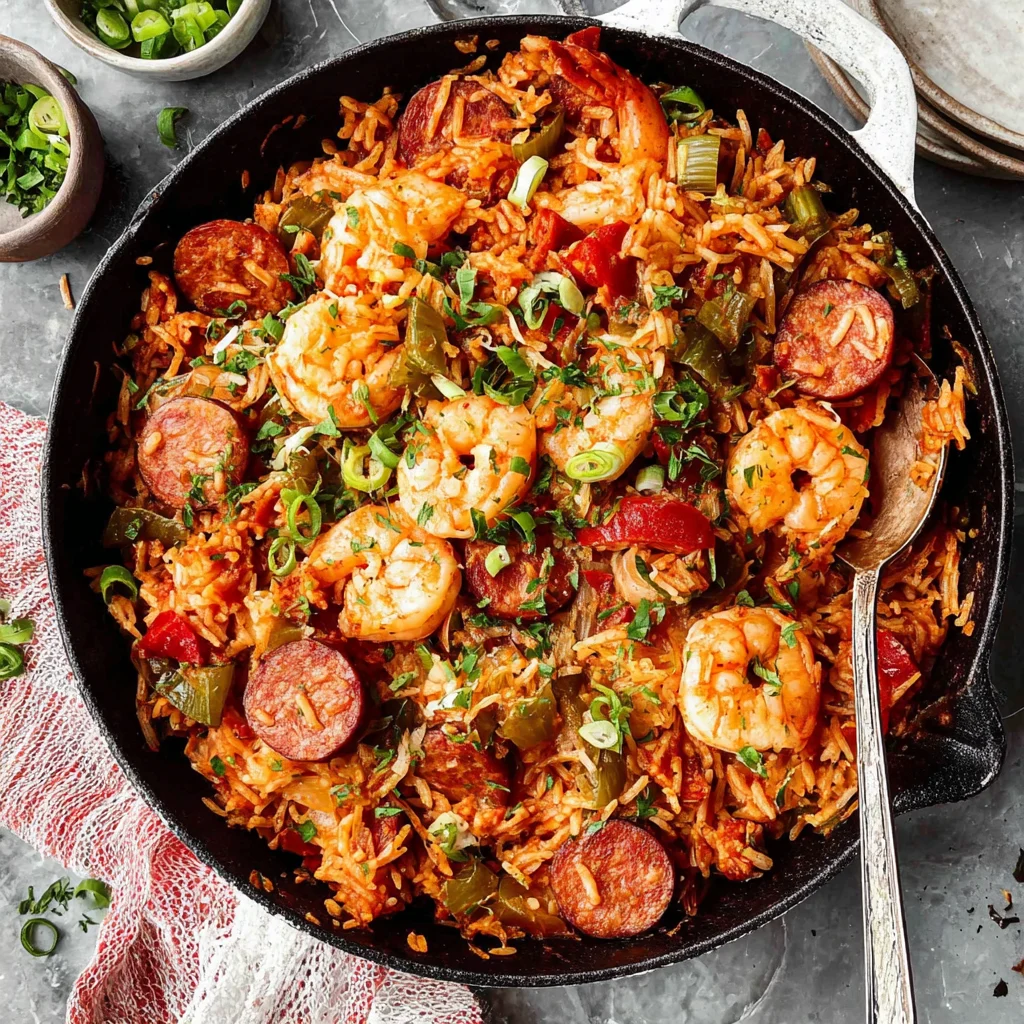
Serve this vibrant jambalaya family-style directly from the pot, allowing everyone to appreciate the beautiful colors and incredible aroma. A generous serving in a wide, shallow bowl shows off the dish beautifully and makes it easy to enjoy every component.
Perfect Pairings: Complement the rich, spicy flavors with cooling sides like a simple green salad with vinaigrette or creamy coleslaw. Warm cornbread or crusty French bread helps soak up any delicious juices. For beverages, consider sweet tea, cold beer, or a refreshing lemonade to balance the heat.
Festive Presentation: For Mardi Gras celebrations, serve alongside other Louisiana favorites like beignets for dessert. Garnish each serving with extra green onions and a sprinkle of paprika for color. Don’t forget to have hot sauce available for those who love extra heat.
Portion Planning: This recipe easily serves 6 as a main course, but you can stretch it to serve 8 when paired with hearty sides and appetizers.
Common Mistakes to Avoid
The most frequent mistake when making jambalaya is lifting the lid too often during the rice cooking process. This releases essential steam and can result in unevenly cooked rice. Trust the process and let the covered pot work its magic.
Rice Texture Issues: Using the wrong type of rice can ruin your jambalaya. Long-grain white rice is essential—short-grain or instant rice will become mushy. Also, avoid stirring too vigorously once the liquid is added, as this can break the rice grains and create a sticky texture.
Protein Timing: Adding shrimp too early causes them to become rubbery. Always add them during the final few minutes of cooking. Conversely, don’t add raw chicken at the same time as shrimp—chicken needs more cooking time.
Seasoning Balance: Taste and adjust seasonings at the end of cooking. The flavors concentrate as the liquid reduces, so what seems bland early in cooking often becomes perfectly seasoned by the finish.
Heat Control: Cooking on too high heat after adding the liquid can cause the bottom to burn before the rice cooks through. Low, steady heat produces the best results.
Storing Tips for the Recipe
Store leftover jambalaya in airtight containers in the refrigerator for up to 4 days. The flavors actually improve overnight, making leftovers incredibly delicious. Divide large batches into smaller containers for quicker cooling and easier reheating.
Reheating Methods: For best results, reheat jambalaya gently in a covered pot over low heat, adding a splash of chicken broth if needed to restore moisture. Microwave individual portions on 50% power, stirring halfway through to ensure even heating. Avoid high heat, which can make the rice mushy.
Freezer Storage: This jambalaya freezes well for up to 3 months. Cool completely before freezing, and consider freezing in meal-sized portions. Thaw overnight in the refrigerator before reheating. The texture may be slightly softer after freezing, but the flavors remain excellent.
Make-Ahead Strategy: You can prepare jambalaya completely up to 2 days ahead, storing it covered in the refrigerator. This actually enhances the flavors and makes entertaining much easier.
Conclusion
This Mardi Gras Jambalaya brings the authentic taste of Louisiana right to your kitchen with surprisingly simple techniques. The combination of smoky sausage, tender shrimp, perfectly seasoned chicken, and aromatic rice creates a dish that’s both comforting and exciting—perfect for family dinners or festive gatherings.
The beauty of this one-pot wonder lies not just in its incredible flavors, but in its ability to bring people together around the table. Each spoonful delivers the warmth and hospitality that Louisiana cuisine is famous for, making any meal feel like a celebration.
Don’t hesitate to make this your own by adjusting spice levels or trying different protein combinations. The flexible nature of jambalaya means you can create countless variations while staying true to its soulful roots. Give this recipe a try, and get ready to experience the magic of authentic Cajun cooking in your own home.
FAQs
Can I make this jambalaya without seafood?
Absolutely! Simply omit the shrimp and increase the chicken and sausage quantities. You can also add extra vegetables like diced bell peppers or mushrooms to maintain the hearty texture. The cooking method remains exactly the same.
What’s the difference between Cajun and Creole jambalaya?
Cajun jambalaya, like this recipe, cooks everything together in one pot and typically doesn’t include tomatoes as a main ingredient. Creole jambalaya often has more tomatoes and sometimes involves cooking components separately before combining.
How can I adjust the spice level?
Start with less Cajun seasoning and add more to taste at the end of cooking. For milder jambalaya, use only 1 tablespoon of Cajun seasoning and add paprika for color. For more heat, add cayenne pepper or hot sauce during cooking.
Can I use brown rice instead of white rice?
Yes, but you’ll need to adjust the cooking time and liquid. Use an additional 1/2 cup of broth and extend the covered cooking time to 35-40 minutes. Brown rice takes longer to absorb liquid and become tender.
What should I do if my rice is too wet or too dry?
If too wet, remove the lid and cook on low heat for a few more minutes, stirring occasionally. If too dry, add warm broth a few tablespoons at a time and continue cooking covered until rice is tender.
How far ahead can I prep the ingredients?
You can dice all vegetables and cut proteins up to 24 hours ahead. Store them separately in the refrigerator. However, don’t season the proteins until you’re ready to cook, as salt can draw out moisture and affect browning.