
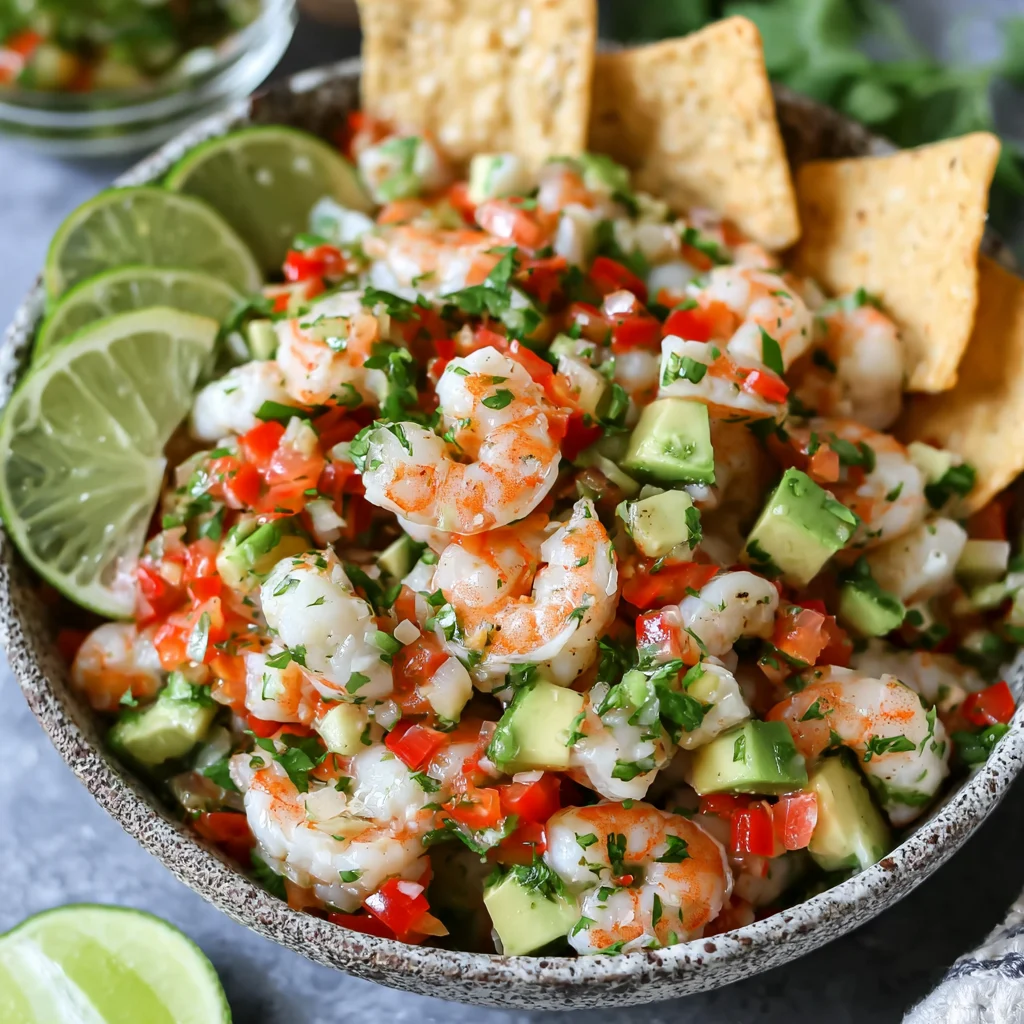
Introduction
The first time I tasted authentic ceviche was at a bustling coastal market in Lima, where the vendor’s weathered hands transformed fresh shrimp into pure magic with nothing but citrus juice, onions, and time. That moment sparked my love affair with this incredible dish that proves the best recipes don’t need complicated techniques or expensive equipment.
This easy shrimp ceviche brings those vibrant flavors straight to your kitchen in just 20 minutes. Unlike traditional preparations that require hours of “cooking” seafood in citrus acids, this version uses briefly poached shrimp for food safety while maintaining that signature tangy, refreshing taste that makes ceviche so irresistible.
Ceviche originated centuries ago along South America’s Pacific coast, where indigenous communities discovered that citrus acids could transform raw fish into something extraordinary. Today, this simple yet sophisticated dish remains a celebration of fresh ingredients and bold flavors that transport you to sun-soaked beaches with every bite.
Ingredients List
Base Ingredients:
- 1 pound large shrimp, peeled and deveined
- 1/2 cup fresh lime juice (about 4-6 limes)
- 1/4 cup fresh lemon juice (about 2 lemons)
- 1 medium red onion, thinly sliced
- 2 Roma tomatoes, seeded and diced
- 1 cucumber, peeled and diced
Flavor Enhancers:
- 2-3 jalapeño peppers, seeded and minced (adjust to taste)
- 1/4 cup fresh cilantro, chopped
- 2 cloves garlic, minced
- 1 teaspoon kosher salt
- 1/2 teaspoon black pepper
Garnish & Serving:
- 1 avocado, diced
- Tortilla chips or plantain chips
- Extra lime wedges
- Hot sauce (optional)
Smart Substitutions:
Replace jalapeños with serrano peppers for extra heat, or bell peppers for a mild version. Swap red onion with sweet Vidalia onion if you prefer less bite. For citrus alternatives, try orange juice mixed with lime for a sweeter profile. Those avoiding shellfish can substitute firm white fish like mahi-mahi or halibut, diced into shrimp-sized pieces.
Timing
Total Time: 20 minutes
Prep Time: 15 minutes
Cooking Time: 5 minutes
This lightning-fast timeline makes shrimp ceviche perfect for spontaneous gatherings or weeknight dinners when you crave something fresh and satisfying. The beauty lies in simultaneous preparation – while your shrimp cools after poaching, you can dice vegetables and mix the citrus marinade.
Time-Saving Tips: Prep vegetables up to 4 hours ahead and store them separately in the refrigerator. Buy pre-cooked shrimp to eliminate cooking time entirely, though briefly poaching raw shrimp creates superior texture and flavor absorption.
Make-Ahead Strategy: Prepare everything except avocado up to 2 hours before serving. Add diced avocado just before presentation to prevent browning and maintain that perfect creamy contrast.
How to Make It
1. Prepare the Shrimp
Bring a large pot of salted water to boil. Add shrimp and cook for 2-3 minutes until they turn pink and curl slightly. The key is not overcooking – shrimp continue cooking from residual heat even after removal. Immediately transfer to an ice bath to stop the cooking process and preserve that tender, succulent texture.
Once cooled, pat shrimp completely dry and cut into bite-sized pieces. This step is crucial because excess moisture dilutes the citrus marinade and creates a watery final dish.
2. Create the Citrus Base
Combine fresh lime juice, lemon juice, and minced garlic in a large glass or ceramic bowl. The acidity will mellow the raw garlic while infusing the citrus with aromatic depth. Never use metal bowls, as they can react with acidic ingredients and create off-flavors.
Taste your citrus mixture – it should be pleasantly tart but not face-puckeringly sour. Adjust the lemon-to-lime ratio based on your citrus fruits’ natural sweetness and your personal preference.
3. Combine and Marinate
Add the cooled shrimp pieces to the citrus mixture, ensuring they’re completely submerged. The acid will continue tenderizing the shrimp while infusing them with bright, zesty flavors. Let this mixture rest for 5 minutes while you prepare the vegetables.
4. Add the Vegetables
Fold in sliced red onion, diced tomatoes, cucumber, and minced jalapeños. The vegetables should maintain their crispness, providing textural contrast to the tender shrimp. Season generously with salt and pepper, remembering that the flavors will meld and balance as the ceviche sits.
5. Final Assembly
Gently stir in fresh cilantro, taking care not to bruise the delicate herbs. Taste and adjust seasoning – you might need more salt to enhance the natural sweetness of the shrimp, or additional lime juice for extra brightness.
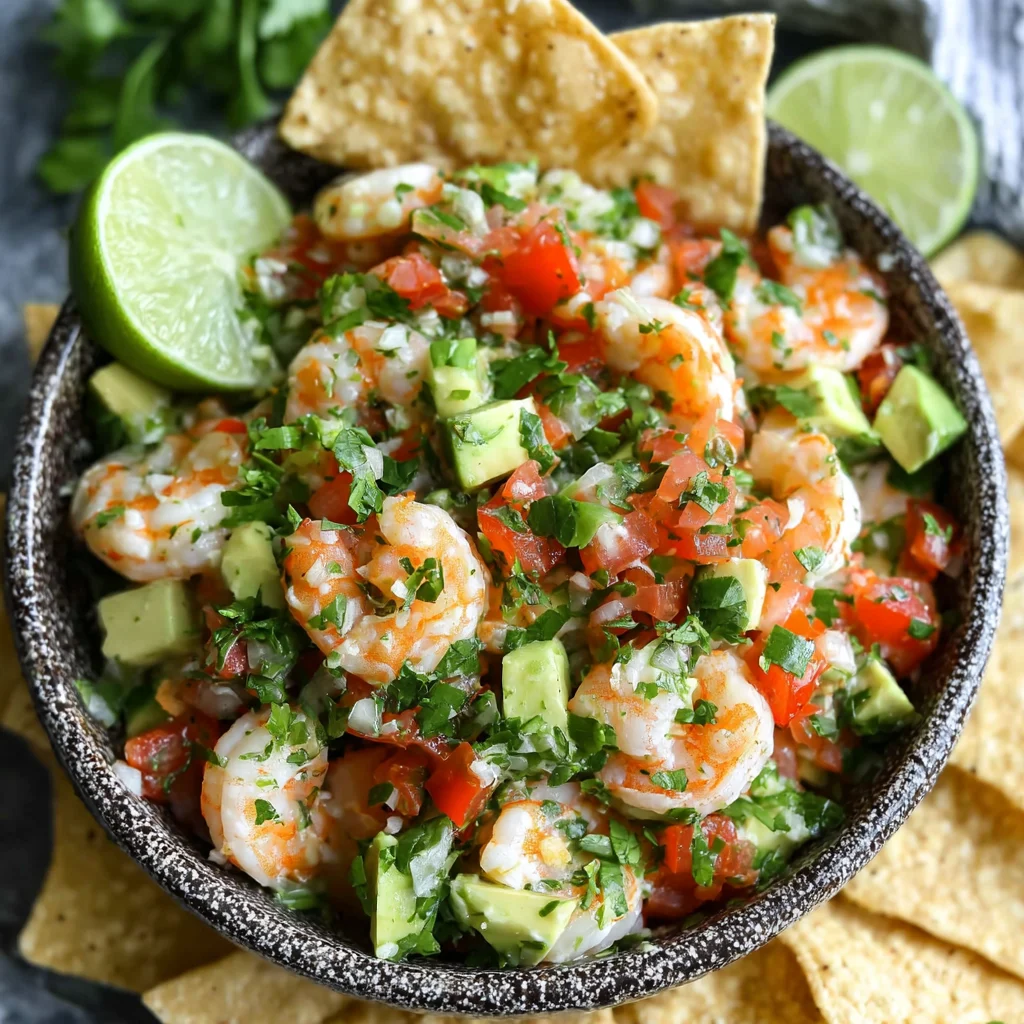
Just before serving, fold in diced avocado with the lightest touch possible. The creamy avocado provides richness that balances the acidic citrus and adds beautiful color contrast.
Nutritional Information
Each serving of this easy shrimp ceviche provides approximately 180-200 calories, making it a light yet satisfying meal option. Shrimp offers high-quality lean protein (about 20 grams per serving) with minimal saturated fat, supporting muscle maintenance and satiety.
The abundant citrus provides vitamin C, while tomatoes contribute lycopene and folate. Avocado adds heart-healthy monounsaturated fats and fiber. The overall dish delivers a balanced combination of protein, healthy fats, and vegetables with minimal processed ingredients.
This naturally gluten-free dish fits various dietary patterns, from Mediterranean to low-carb approaches. The high water content from vegetables and citrus helps with hydration, while the protein supports stable blood sugar levels.
Nutritional values may vary based on ingredient sizes and specific brands used. Consult a registered dietitian for personalized nutritional guidance.
Healthier Alternatives for the Recipe
Lower Sodium Version: Reduce added salt and enhance flavors with extra herbs like cilantro, mint, or oregano. Lemon zest adds brightness without sodium, while a splash of rice vinegar provides subtle tang.
Heart-Healthy Boost: Double the avocado content and add diced mango for natural sweetness and additional fiber. Include finely chopped bell peppers for extra vitamin C and antioxidants.
Lighter Option: Replace half the shrimp with diced jicama or hearts of palm for similar texture with fewer calories. These vegetables absorb the citrus marinade beautifully while adding satisfying crunch.
Anti-Inflammatory Focus: Include turmeric in the citrus mixture and add pomegranate seeds for antioxidants. Fresh ginger (minced finely) provides warming spice and potential anti-inflammatory benefits.
Vegan Adaptation: Substitute hearts of palm or king oyster mushrooms for shrimp. These ingredients provide similar texture and absorb the marinade effectively, though the flavor profile will obviously differ from traditional ceviche.
Serving Suggestions
Present your ceviche in chilled glass bowls or martini glasses for elegant individual portions. The clear glass showcases the colorful ingredients while keeping the dish refreshingly cool. For casual gatherings, serve family-style in a large shallow bowl surrounded by various chip options.
Perfect Pairings: Crispy plantain chips offer sweet contrast to the tangy ceviche, while blue corn tortilla chips provide earthy depth. Serve alongside black bean salad or coconut rice for a complete meal that feels like a tropical vacation.
Beverage Matches: The bright acidity pairs beautifully with crisp white wines like Sauvignon Blanc or Albariño. For non-alcoholic options, try sparkling water with lime or hibiscus iced tea. Beer lovers should reach for light lagers or wheat beers that won’t compete with the delicate flavors.
Seasonal Variations: Summer calls for additional cucumber and fresh corn kernels, while winter versions benefit from diced mango or papaya for sweetness. Spring preparations shine with radish slices and microgreens for peppery bite and visual appeal.
Common Mistakes to Avoid
Overcooking the Shrimp: The most frequent error results in rubbery, tough shrimp that won’t absorb the citrus marinade properly. Watch for the moment shrimp turn pink and curl – this indicates doneness. Immediately transfer to ice water to prevent residual cooking.
Using Metal Bowls: Reactive metals like aluminum can interact with citrus acids, creating metallic off-flavors that ruin the fresh taste. Stick with glass, ceramic, or food-grade plastic containers for preparation and storage.
Skipping the Ice Bath: Failing to cool shrimp quickly leaves them overcooked and prevents proper texture development. The temperature shock also helps shrimp absorb the marinade more effectively.
Adding Avocado Too Early: Avocado browns quickly in acidic environments and becomes mushy with extended exposure. Always add it just before serving to maintain appealing color and creamy texture.
Insufficient Seasoning: The high water content from vegetables and citrus dilutes flavors, requiring more salt than you might expect. Taste frequently and adjust seasoning gradually, allowing time for flavors to meld between adjustments.
Storing Tips for the Recipe
Refrigerator Storage: Store ceviche in airtight glass containers for up to 24 hours maximum. The citrus acid continues working on the shrimp and vegetables, eventually making textures mushy if stored longer. Keep avocado separate and add just before serving.
Food Safety Notes: Always use fresh, high-quality shrimp from reputable sources. The brief cooking method in this recipe ensures food safety while maintaining the traditional ceviche experience. Never leave ceviche at room temperature for more than 2 hours.
Optimal Storage Method: Layer plastic wrap directly on the ceviche surface before covering the container to minimize air exposure. This prevents oxidation and maintains the bright, fresh flavors that make ceviche so appealing.
Freezing Considerations: Freezing isn’t recommended as the high water content in vegetables creates ice crystals that destroy texture upon thawing. The delicate balance of flavors also suffers from freezing and thawing cycles.
Make-Ahead Components: Prepare and store the citrus marinade separately for up to 2 days. Cook shrimp up to 1 day ahead and refrigerate. Combine components within 2 hours of serving for best results.
Serving Suggestions
Transform your ceviche presentation with creative serving ideas that enhance both visual appeal and eating experience. Individual mason jars create perfect portion control while maintaining the fresh, casual vibe that makes ceviche so appealing for gatherings.
Elegant Presentations: Serve in hollowed-out avocado halves for Instagram-worthy individual portions that eliminate the need for separate bowls. Cucumber cups offer another creative vessel that adds extra crunch and reduces cleanup.
Party-Style Service: Create a ceviche bar with various toppings like toasted coconut flakes, diced mango, different hot sauces, and multiple chip varieties. Guests love customizing their portions while you enjoy the interactive element.
Complete Meal Ideas: Pair with coconut cilantro rice, black bean salad, or grilled corn for a satisfying dinner that feels restaurant-quality. The combination provides complementary flavors and textures that turn light ceviche into a substantial meal.
Common Mistakes to Avoid
Temperature Control Issues: Serving ceviche at room temperature diminishes the refreshing quality that defines this dish. Always chill serving bowls and keep ingredients cold until the moment of service. The contrast between cool ceviche and warm, crispy chips creates the perfect textural experience.
Inconsistent Chopping: Uniform dice sizes ensure even flavor distribution and professional presentation. Large chunks of onion can overwhelm delicate shrimp, while tiny vegetable pieces disappear into the marinade without contributing textural interest.
Citrus Quality Compromises: Using bottled lime juice instead of fresh citrus creates flat, artificial flavors that can’t compare to the bright complexity of freshly squeezed juice. The oils in fresh citrus zest also contribute aromatic compounds that elevate the entire dish.
Timing Mistakes: Preparing ceviche too far in advance results in mushy vegetables and over-marinated shrimp that lose their appealing texture. Conversely, serving immediately after combining ingredients doesn’t allow sufficient time for flavors to meld and develop complexity.
Storing Tips for the Recipe
Container Selection: Wide, shallow containers work better than deep bowls for storing ceviche because they allow more even marinade distribution and easier serving. Glass containers prevent flavor absorption and make it easy to see the colorful ingredients.
Layering Strategy: Place more delicate ingredients like avocado and herbs on top where they experience less pressure from heavier components. This simple technique maintains better texture throughout storage time.
Revival Techniques: If stored ceviche loses brightness, refresh with additional lime juice and a pinch of salt just before serving. Fresh cilantro added at the last moment also restores aromatic appeal that may fade during storage.
Safety Protocols: Label containers with preparation dates and discard any ceviche that develops off odors or slimy textures. When in doubt about freshness, especially with seafood dishes, err on the side of caution and prepare a fresh batch.
Conclusion
This easy shrimp ceviche proves that exceptional flavors don’t require complicated techniques or extensive ingredient lists. The combination of tender shrimp, vibrant vegetables, and zesty citrus creates a dish that’s simultaneously light and satisfying, perfect for warm weather entertaining or any time you crave something fresh and exciting.
The beauty of ceviche lies in its adaptability – once you master this basic technique, you can customize ingredients based on seasonal availability, dietary preferences, or simply what looks best at your local market. Each variation tells a different story while maintaining that essential bright, clean flavor profile that makes ceviche universally beloved.
Whether you’re planning a summer party, seeking a quick weeknight dinner, or wanting to impress guests with minimal effort, this recipe delivers consistent, restaurant-quality results every time. The 20-minute timeline means you can satisfy ceviche cravings almost instantly, while the make-ahead components offer flexibility for busy schedules.
Don’t hesitate to make this recipe your own by adjusting heat levels, trying different vegetables, or experimenting with garnishes. Share your creative variations and let me know how this easy shrimp ceviche becomes part of your cooking repertoire!
FAQs
Can I use frozen shrimp for this recipe?
Absolutely! Thaw frozen shrimp completely in the refrigerator overnight, then pat them thoroughly dry before cooking. Frozen shrimp often work better than previously frozen “fresh” shrimp from the seafood counter, as they’re typically flash-frozen immediately after harvesting, preserving optimal texture and flavor.
How long should ceviche marinate for best results?
This cooked shrimp version reaches peak flavor after 10-15 minutes of marinating. Unlike traditional raw fish ceviche that requires hours, the pre-cooked shrimp only needs time for the citrus and seasonings to penetrate. Over-marinating can result in mushy texture and overpowering acidity.
What’s the best way to reduce the onion’s sharpness?
Soak sliced onions in cold water for 10 minutes, then drain and pat dry before adding to the ceviche. This technique removes harsh sulfur compounds while maintaining the onion’s crisp texture and mild bite. Alternatively, use sweet onions like Vidalia or Walla Walla for naturally milder flavor.
Can I make ceviche without cooking the shrimp first?
While traditional ceviche uses citric acid to “cook” raw seafood, food safety experts recommend using sushi-grade fish or briefly cooking shellfish like shrimp. The cooking method in this recipe provides peace of mind while maintaining authentic flavors and textures.
What should I do if my ceviche tastes too acidic?
Balance excessive acidity by adding a pinch of sugar or honey to round out the flavors. Diced mango or pineapple provides natural sweetness while complementing the tropical flavor profile. Additional av