
Introduction
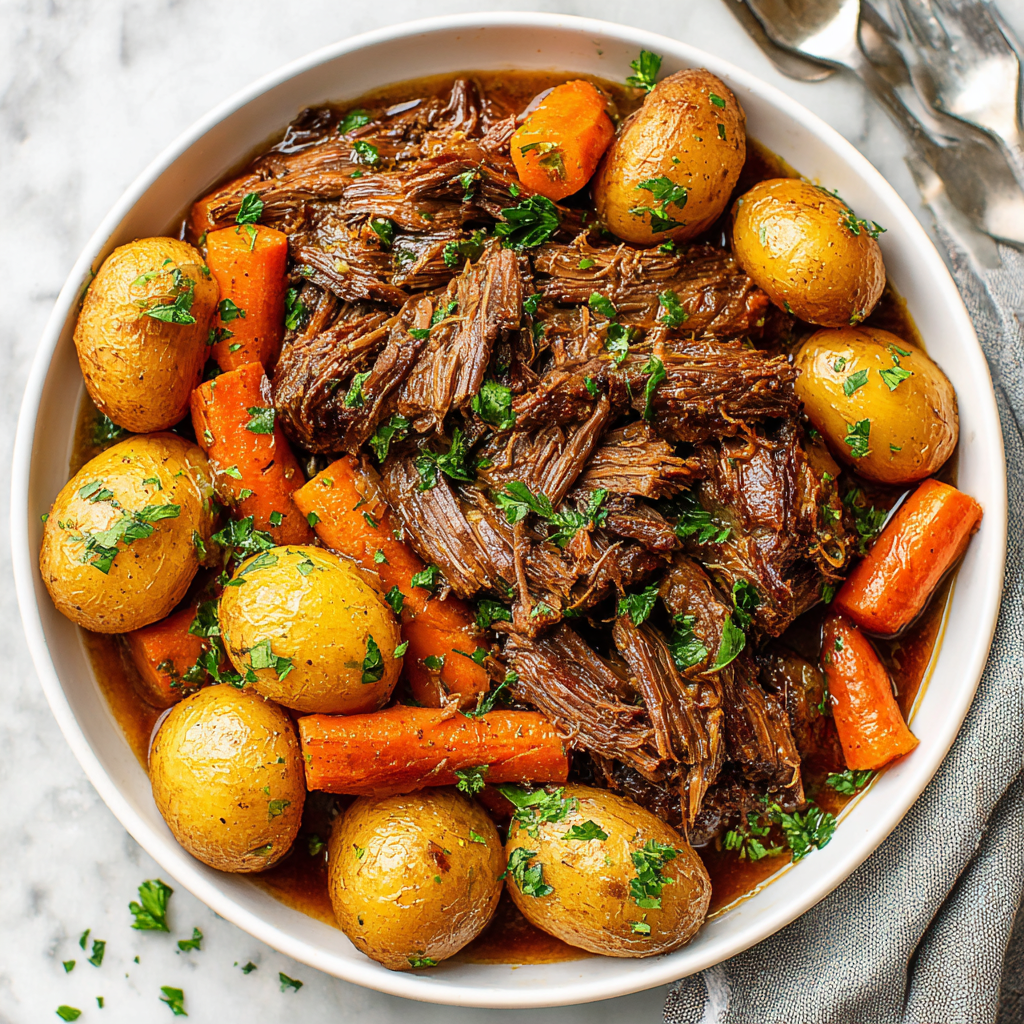
Nothing quite captures the essence of home cooking like a tender, succulent crockpot pot roast that fills your kitchen with the most incredible aromas. This beloved comfort food has been warming hearts and satisfying souls for generations, transforming humble cuts of beef into something truly magical with just a little patience and the gentle, slow heat of your trusty slow cooker.
What makes this crockpot pot roast so special is how effortlessly it brings families together around the dinner table. The beauty lies not just in its rich, savory flavors, but in how the slow cooking process allows even the toughest cuts of meat to become fork-tender while you go about your day. Whether you're juggling work deadlines, chasing after kids, or simply wanting to come home to a ready-made feast, this recipe delivers restaurant-quality results with minimal hands-on time. The combination of perfectly seasoned vegetables and melt-in-your-mouth beef creates a complete meal that satisfies everyone from picky eaters to sophisticated palates.
Ingredients List
For the Roast:
- 3-4 pounds chuck roast (or substitute with bottom round roast for a leaner option)
- 2 tablespoons olive oil or vegetable oil
- 1 teaspoon salt
- 1/2 teaspoon black pepper
- 1 teaspoon garlic powder
- 1 teaspoon onion powder
For the Vegetables:
- 1 large yellow onion, cut into thick wedges
- 1 pound baby potatoes, halved (or 3 large russet potatoes, chunked)
- 1 pound carrots, cut into 2-inch pieces
- 3 celery stalks, chopped
- 4 garlic cloves, minced
For the Cooking Liquid:
- 2 cups beef broth (low-sodium preferred)
- 1/4 cup red wine (optional, can substitute with additional broth)
- 2 tablespoons Worcestershire sauce
- 2 tablespoons tomato paste
- 2 bay leaves
- 1 tablespoon fresh thyme (or 1 teaspoon dried)
- 1 tablespoon fresh rosemary, chopped (or 1 teaspoon dried)
For Thickening (Optional):
- 3 tablespoons cornstarch
- 3 tablespoons cold water
Dietary Substitutions: For gluten-free preparation, ensure your Worcestershire sauce is gluten-free. Those following a lower-sodium diet can reduce salt and use no-salt-added broth. For dairy-free needs, this recipe is naturally dairy-free as written.
Timing
Total Time: 8 hours 30 minutes
- Prep Time: 20 minutes
- Searing Time: 10 minutes
- Slow Cooking Time: 8 hours (low) or 4 hours (high)
Time Management Tips: Start your prep the night before by cutting vegetables and storing them in the refrigerator. The morning of, you can have everything in the crockpot within 15 minutes. For busy weekday meals, prep on Sunday evening for Monday's dinner. The low and slow method works beautifully for all-day cooking, making it perfect for work-from-home days or weekend relaxation.
Make-Ahead Suggestions: This roast actually improves in flavor when made a day ahead. You can also prep all ingredients the night before and store them separately, then combine everything in the morning for effortless cooking.
How to Make It
1. Season and Prepare the Roast
Pat your chuck roast completely dry with paper towels – this step is crucial for proper searing. In a small bowl, combine salt, pepper, garlic powder, and onion powder. Rub this seasoning mixture generously all over the roast, pressing gently to help it adhere. Let the seasoned roast sit at room temperature for about 10 minutes while you prepare your other ingredients.
2. Sear for Maximum Flavor
Heat olive oil in a large skillet over medium-high heat until it shimmers. Carefully place the seasoned roast in the hot oil and sear for 3-4 minutes per side until you achieve a beautiful golden-brown crust. Don't worry about cooking it through – you're just building that incredible depth of flavor that makes all the difference in your final dish.
3. Layer the Vegetables
Place the seared roast in your crockpot, then arrange the onion wedges, halved potatoes, carrot pieces, and celery around the meat. Sprinkle the minced garlic over the vegetables. The vegetables will release moisture during cooking, which helps create the perfect braising environment.
4. Create the Braising Liquid
In the same skillet you used for searing (don't clean it – those browned bits are flavor gold!), whisk together the beef broth, red wine, Worcestershire sauce, and tomato paste. Scrape up any browned bits from the bottom of the pan as this adds incredible richness to your gravy. Pour this mixture over the roast and vegetables in the crockpot.
5. Add Herbs and Slow Cook
Tuck the bay leaves and fresh herbs around the roast. Cover and cook on low for 8 hours or high for 4 hours. The roast is done when it shreds easily with a fork and the vegetables are tender throughout. Resist the urge to lift the lid frequently – each peek releases valuable heat and extends cooking time.
6. Rest and Serve
Remove the bay leaves and let the roast rest for 10 minutes before slicing or shredding. If you prefer a thicker gravy, whisk cornstarch with cold water and stir into the cooking juices, then cook on high for 10-15 minutes until thickened.
Nutritional Information
Per serving (based on 6 servings):
- Calories: Approximately 420-450
- Protein: 35-40g
- Carbohydrates: 25-30g
- Fat: 18-22g
- Fiber: 4-5g
This hearty meal provides excellent protein for muscle maintenance and repair, while the vegetables contribute essential vitamins, minerals, and fiber. Chuck roast is rich in iron, zinc, and B-vitamins, particularly B12. The slow cooking method helps break down tough connective tissues, making the nutrients more bioavailable.
The combination of vegetables provides vitamin A from carrots, potassium from potatoes, and various antioxidants from the herbs and aromatics. This complete meal offers balanced nutrition with satisfying protein and energy-sustaining carbohydrates.
Nutritional values are approximate and may vary based on specific ingredients and portion sizes used.
Healthier Alternatives for the Recipe
Lower Calorie Options: Choose a leaner cut like eye of round roast, though it may be slightly less tender. Increase the vegetable ratio and reduce the meat portion. Skip the oil for searing and use cooking spray instead.
Reduced Sodium Version: Use no-salt-added beef broth and reduce the salt in the seasoning blend. Add more herbs and spices like paprika, oregano, or Italian seasoning to boost flavor without sodium.
Vegetarian Alternative: Replace the roast with large portobello mushroom caps or a combination of root vegetables like parsnips, turnips, and extra potatoes. Use vegetable broth and add a tablespoon of soy sauce for umami depth.
Keto-Friendly Adaptation: Omit the potatoes and carrots, replacing them with low-carb vegetables like radishes, cauliflower, and additional celery. The radishes become surprisingly potato-like when slow-cooked.
Serving Suggestions
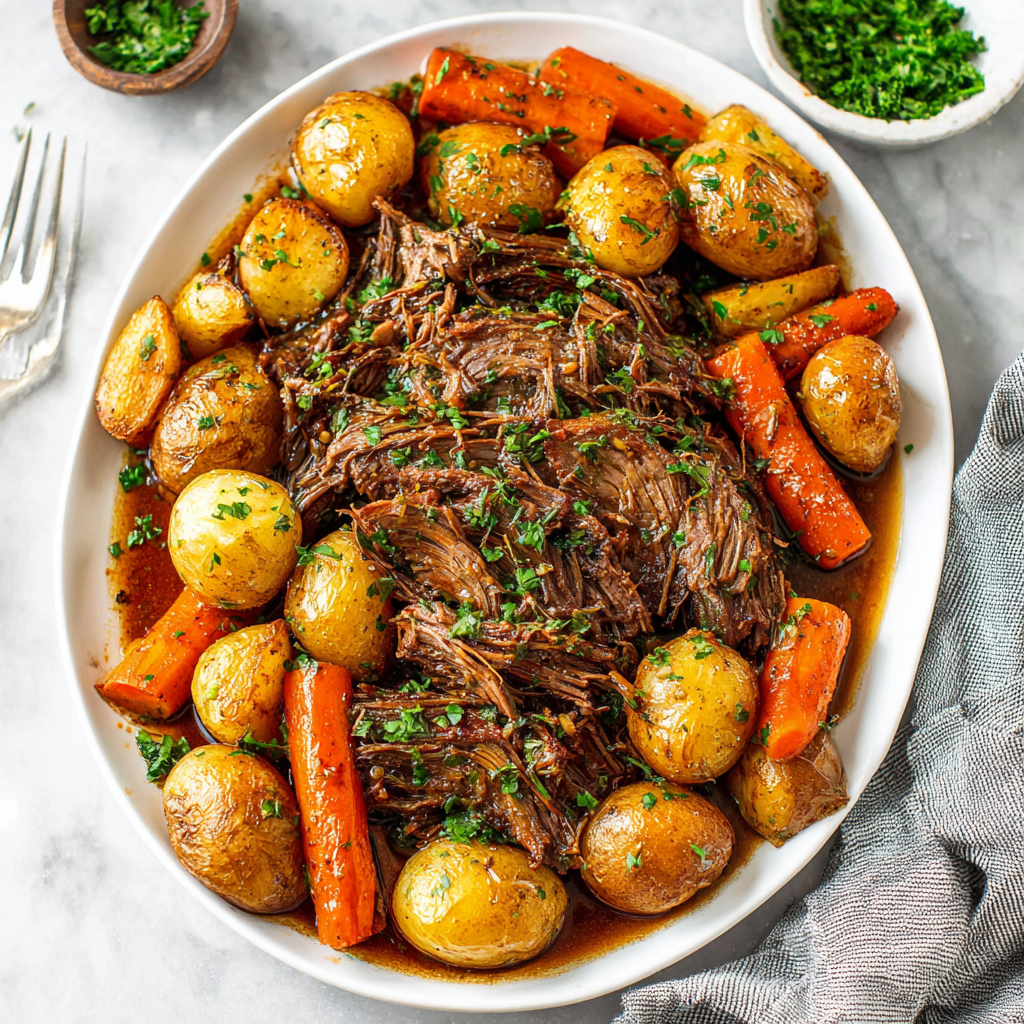
Serve this magnificent crockpot pot roast family-style on a large platter, surrounded by the tender vegetables and drizzled with the rich cooking juices. The natural presentation is both rustic and elegant.
Perfect Pairings: Complement this hearty dish with warm dinner rolls or crusty bread for soaking up the flavorful gravy. A simple green salad with vinaigrette provides a fresh contrast to the rich meat. For beverages, consider a robust red wine like Cabernet Sauvignon or a hoppy beer.
Seasonal Variations: In fall, add chunks of butternut squash or sweet potatoes. During winter, incorporate parsnips or turnips. Spring calls for fresh peas added in the last 30 minutes of cooking.
Portion Guidance: Plan for about 6-8 ounces of cooked meat per person, which accounts for the weight loss during cooking. This recipe comfortably serves 6 people with generous portions.
Common Mistakes to Avoid
Skipping the Searing Step: Many home cooks skip searing to save time, but this crucial step develops complex flavors that can't be achieved any other way. The caramelized surface adds incredible depth to your final dish.
Overcrowding the Crockpot: Filling your slow cooker beyond two-thirds capacity can result in uneven cooking. If needed, use a larger crockpot or reduce the recipe proportionally.
Adding Vegetables Too Early: While root vegetables hold up well to long cooking, more delicate vegetables like mushrooms or bell peppers should be added in the final 2 hours to prevent them from becoming mushy.
Lifting the Lid Frequently: Each time you lift the lid, you release heat and extend cooking time by 15-20 minutes. Trust the process and resist the temptation to check constantly.
Not Letting the Meat Rest: Slicing immediately after cooking causes the juices to run out. Let the roast rest for 10 minutes to redistribute the juices for maximum tenderness.
Storing Tips for the Recipe
Refrigerator Storage: Cool the pot roast completely before transferring to airtight containers. Properly stored, it will keep for 3-4 days in the refrigerator. Store the meat and vegetables with some of the cooking liquid to prevent drying out.
Freezer Storage: This pot roast freezes beautifully for up to 3 months. Portion into family-sized containers with cooking liquid. For best results, slightly undercook if you plan to freeze, as reheating will continue the cooking process.
Reheating Instructions: For refrigerated leftovers, reheat gently in the microwave with a splash of broth or water to prevent drying. For frozen portions, thaw overnight in the refrigerator, then reheat slowly on the stovetop or in a 325°F oven until heated through.
Make-Ahead Preparation: You can prep this entire recipe up to 24 hours in advance. Store the seared meat and prepared vegetables separately in the refrigerator, then combine in the crockpot when ready to cook.
Conclusion
This crockpot pot roast represents everything wonderful about slow cooking – the way simple ingredients transform into something extraordinary with just time and gentle heat. The tender, flavorful meat paired with perfectly cooked vegetables creates a meal that brings comfort and satisfaction to any table.
The beauty of this recipe lies in its flexibility and forgiveness. Whether you're a seasoned cook or just starting your culinary journey, this foolproof method delivers consistently delicious results. Once you experience the convenience and incredible flavors of this slow-cooked masterpiece, it's sure to become a regular rotation in your meal planning.
Give this recipe a try and discover why crockpot pot roast has remained a beloved family favorite for generations. Don't forget to share your variations and success stories – there's nothing quite like the joy of passing along a recipe that brings families together around the dinner table.
FAQs
What's the best cut of meat for crockpot pot roast?
Chuck roast is ideal because it has enough marbling and connective tissue to become incredibly tender during slow cooking. Bottom round and arm roast also work well, though they may be slightly less tender.
Can I cook this recipe on high instead of low?
Yes, you can cook on high for 4-5 hours instead of low for 8 hours. However, the low and slow method typically produces more tender results and better flavor development.
Why did my vegetables turn mushy?
Overcooking is usually the culprit. Cut vegetables into larger pieces and consider adding more delicate vegetables like mushrooms in the final 2 hours of cooking.
How do I thicken the cooking liquid into gravy?
Mix 3 tablespoons of cornstarch with 3 tablespoons of cold water to create a slurry. Stir this into the cooking liquid and cook on high for 10-15 minutes until thickened.
Can I make this without searing the meat first?
While you can skip searing, it significantly impacts the flavor. Searing creates a caramelized crust that adds depth and richness to the final dish that can't be replicated any other way.
How do I know when the pot roast is done?
The roast is perfectly done when it shreds easily with a fork and the internal temperature reaches 195-205°F. At this temperature, the connective tissues have broken down completely, creating that melt-in-your-mouth texture.