Introduction
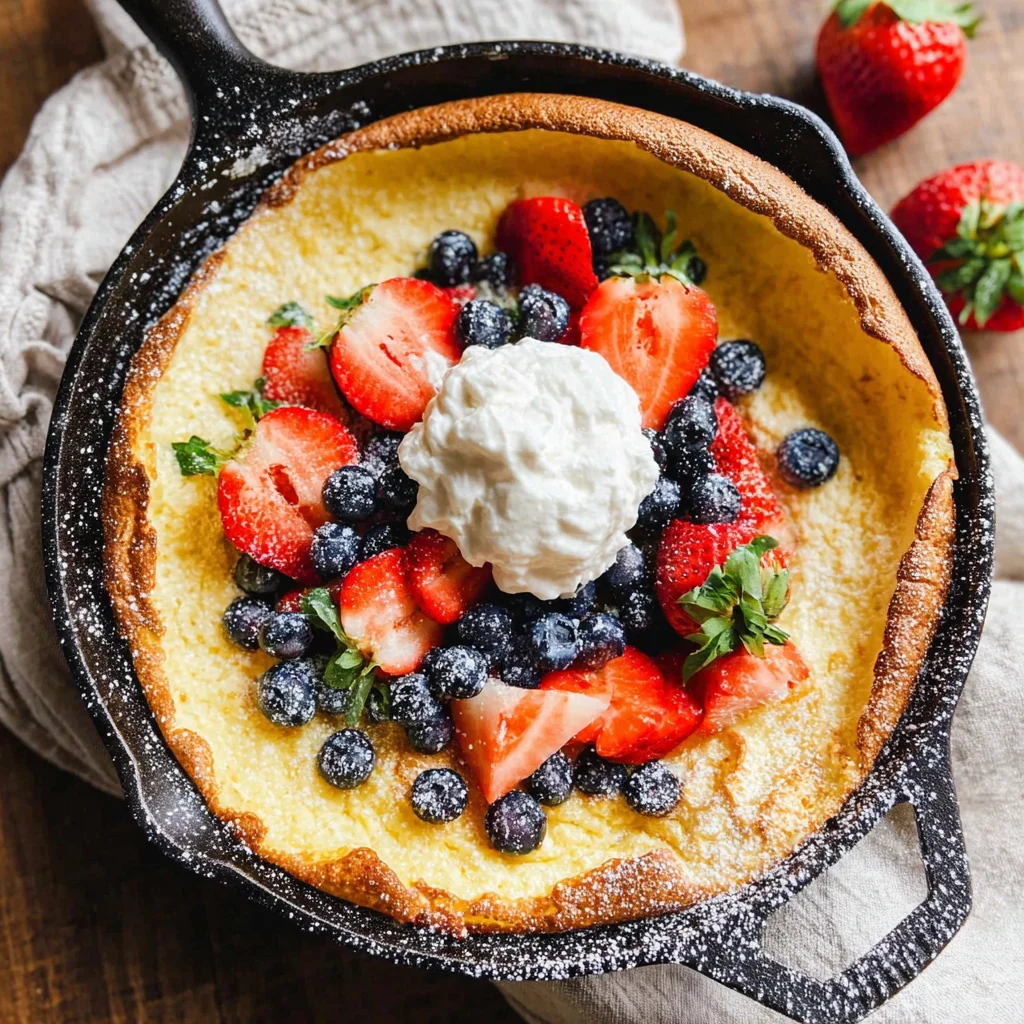
Picture this: a dramatic, golden-brown pancake that rises tall around the edges like a crispy bowl, ready to cradle your favorite toppings. That’s the magic of a Dutch baby recipe – a show-stopping breakfast that looks incredibly impressive but requires minimal effort. This German-inspired pancake (despite its name) transforms simple pantry ingredients into something extraordinary. The best part? It practically makes itself while you sip your morning coffee, delivering restaurant-quality results in just 30 minutes.
Ingredients
• 3 large eggs
• 1/2 cup all-purpose flour
• 1/2 cup whole milk
• 2 tablespoons granulated sugar
• 1/4 teaspoon vanilla extract
• 1/4 teaspoon salt
• 3 tablespoons unsalted butter
• Powdered sugar for dusting
Substitution tips: Swap whole milk for 2% milk or even almond milk, though the texture will be slightly less rich. If you’re out of vanilla, a pinch of cinnamon makes a lovely alternative. For a savory version, omit the sugar and vanilla entirely.
Timing
Prep time: 5 minutes
Cook time: 20-25 minutes
Total time: 30 minutes
Time-saving tip: Mix your batter the night before and store it covered in the refrigerator. Just give it a quick whisk before pouring into your hot skillet.
How to Make It
1. Preheat and Prep
Start by positioning your oven rack in the center and preheating to 425°F (220°C). Place a 10-inch cast iron skillet or heavy oven-safe pan on the stovetop – this step is crucial because the heavy pan ensures even heat distribution and that signature crispy bottom. The cast iron retains heat beautifully, giving you those perfectly golden edges every time.
2. Create the Silky Batter
In a blender or mixing bowl, combine eggs, flour, milk, sugar, vanilla, and salt. Blend for 30-60 seconds until completely smooth with no lumps visible. The batter should have the consistency of heavy cream and pour easily. This smooth texture is what creates the Dutch baby’s characteristic tender interior, so don’t rush this step.
3. Heat the Butter
Place butter in your cast iron skillet and heat over medium-high heat until it melts and starts to foam slightly. You’ll hear gentle sizzling – this means the pan is properly heated. Swirl the butter to coat the bottom and sides of the pan completely. The nutty aroma of the warming butter adds incredible flavor to the final dish.
4. Pour and Bake
Remove the hot skillet from the stovetop and immediately pour the batter into the center. You’ll hear an immediate sizzle as the batter hits the hot butter – this reaction is what starts the magical puffing process. Quickly transfer the skillet to your preheated oven without delay, as the hot pan begins cooking the bottom immediately.
5. Resist and Wait
Bake for 20-25 minutes without opening the oven door – this is absolutely critical. The Dutch baby needs consistent heat to rise properly, and any temperature fluctuation will cause it to deflate. Through the oven window, you’ll watch it transform from flat batter to a dramatically puffed golden bowl with crispy, towering edges.
6. Serve Immediately
Remove from the oven when the edges are golden brown and the center appears set but slightly jiggly. Dust with powdered sugar while still hot and serve immediately, as the Dutch baby will naturally deflate within a few minutes – this is completely normal and expected.
Nutritional Information
One serving (1/4 of the Dutch baby) contains approximately 180 calories, 6g protein, 16g carbohydrates, and 10g fat. This German pancake provides good protein from eggs and essential nutrients like vitamin D and calcium.
Serving Suggestions
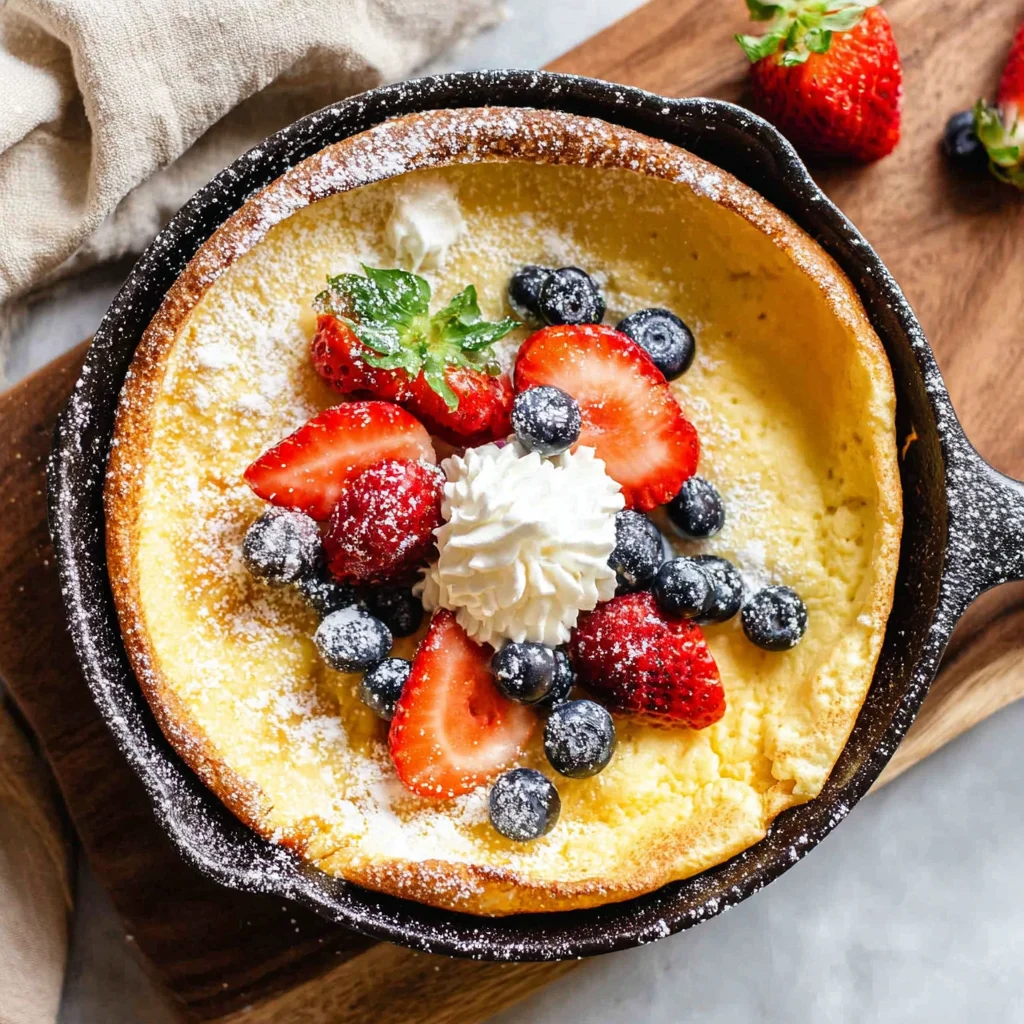
Serve your Dutch baby with fresh berries and maple syrup, or try lemon juice with a dusting of powdered sugar for a classic presentation. Sliced apples sautéed in cinnamon butter make an elegant topping, while crispy bacon on the side balances the sweetness perfectly.
Common Mistakes to Avoid
Using a cold pan: Always preheat your skillet with the butter for proper puffing. Opening the oven door: Resist the temptation to peek, as temperature drops cause deflation. Wrong pan size: A 10-12 inch pan works best; smaller pans create thick, heavy results. Overmixing by hand: Lumpy batter leads to uneven texture, so blend thoroughly until completely smooth.
Storing Tips
Dutch babies are best enjoyed fresh, but leftovers keep in the refrigerator for up to 2 days covered with plastic wrap. Reheat individual portions in a 350°F oven for 5-7 minutes to restore some crispiness, though they won’t puff again.
Conclusion
This Dutch baby recipe delivers impressive results with surprisingly little effort, making it perfect for special weekend breakfasts or whenever you want to create something memorable. Try this recipe and watch your family’s faces light up when you bring this golden beauty to the table!
FAQs
Why didn’t my Dutch baby puff up?
The most common causes are using a pan that wasn’t hot enough or opening the oven door during baking. Make sure your butter is sizzling when you add the batter, and resist peeking until the timer goes off.
Can I make individual Dutch babies?
Absolutely! Use a 6-inch cast iron skillet or oven-safe dish per serving, reduce the baking time to 12-15 minutes, and divide the batter evenly. They’re perfect for portion control and presentation.
What’s the difference between a Dutch baby and a popover?
While similar in technique, Dutch babies are baked in a skillet with butter and served as a sweet pancake, while popovers are baked in specialized molds and served as bread rolls.
Can I make this recipe dairy-free?
Yes, substitute the milk with your preferred plant-based alternative and use vegan butter or oil instead of regular butter. The texture will be slightly different but still delicious.
How do I know when it’s perfectly done?
Look for dramatically puffed edges that are golden brown and a center that’s set but still has a slight jiggle. The edges should sound hollow when lightly tapped with a spoon.
For more amazing breakfast ideas, check out our full collection on recipe Pinterest board!
Dutch Baby Recipe
Ingredients
Method
- Position your oven rack in the center and preheat to 425°F (220°C). Place a 10-inch cast iron skillet or heavy oven-safe pan on the stovetop. The heavy pan ensures even heat distribution and creates the signature crispy bottom with perfectly golden edges.
- In a blender or mixing bowl, combine eggs, flour, milk, sugar, vanilla, and salt. Blend for 30-60 seconds until completely smooth with no lumps visible. The batter should have the consistency of heavy cream and pour easily, which creates the Dutch baby’s characteristic tender interior.
- Place butter in your cast iron skillet and heat over medium-high heat until it melts and starts to foam slightly. You’ll hear gentle sizzling, indicating the pan is properly heated. Swirl the butter to coat the bottom and sides completely – the nutty aroma adds incredible flavor.
- Remove the hot skillet from the stovetop and immediately pour the batter into the center. You’ll hear an immediate sizzle as the batter hits the hot butter – this reaction starts the magical puffing process. Quickly transfer the skillet to your preheated oven without delay.
- Bake for 20-25 minutes without opening the oven door – this is absolutely critical. The Dutch baby needs consistent heat to rise properly, and any temperature fluctuation will cause it to deflate. Watch through the oven window as it transforms into a dramatically puffed golden bowl.
- Remove from the oven when the edges are golden brown and the center appears set but slightly jiggly. Dust with powdered sugar while still hot and serve immediately, as the Dutch baby will naturally deflate within a few minutes – this is completely normal.