

Introduction
When I first tasted authentic Greek salad dressing at a family taverna in Santorini, I knew I had to recreate that perfect balance of tangy lemon, fruity olive oil, and aromatic herbs. This homemade Greek salad dressing captures those Mediterranean flavors in just five minutes, transforming any simple salad into a restaurant-quality dish. Unlike store-bought versions loaded with preservatives, this traditional vinaigrette uses only wholesome ingredients that you likely already have in your pantry.
Ingredients
For the Greek Salad Dressing:
- ¼ cup extra virgin olive oil
- 2 tablespoons fresh lemon juice
- 1 tablespoon red wine vinegar
- 1 teaspoon dried oregano
- 1 clove garlic, minced
- ½ teaspoon Dijon mustard
- Salt and black pepper to taste
Substitutions:
- Replace red wine vinegar with white wine vinegar or apple cider vinegar
- Use lime juice if lemon isn’t available
- Fresh oregano (1 tablespoon) works beautifully instead of dried
Timing
- Prep Time: 5 minutes
- Cook Time: 0 minutes
- Total Time: 5 minutes
Make-ahead tip: This dressing actually improves after sitting for 30 minutes, allowing the flavors to meld together perfectly.
How to Make It
1. Prepare Your Base
Start by whisking together the lemon juice, red wine vinegar, and Dijon mustard in a small bowl. The mustard acts as an emulsifier, helping create that silky smooth texture you want in a proper vinaigrette. You’ll notice the mixture becoming slightly creamy as you whisk – this is exactly what you’re looking for.
2. Add the Aromatics
Stir in the minced garlic and dried oregano. The oregano should smell intensely fragrant when you crush it between your fingers before adding. This is where the authentic Mediterranean flavor really comes alive. The garlic will infuse its pungent bite throughout the dressing, so make sure it’s minced finely to distribute evenly.
3. Stream in the Olive Oil
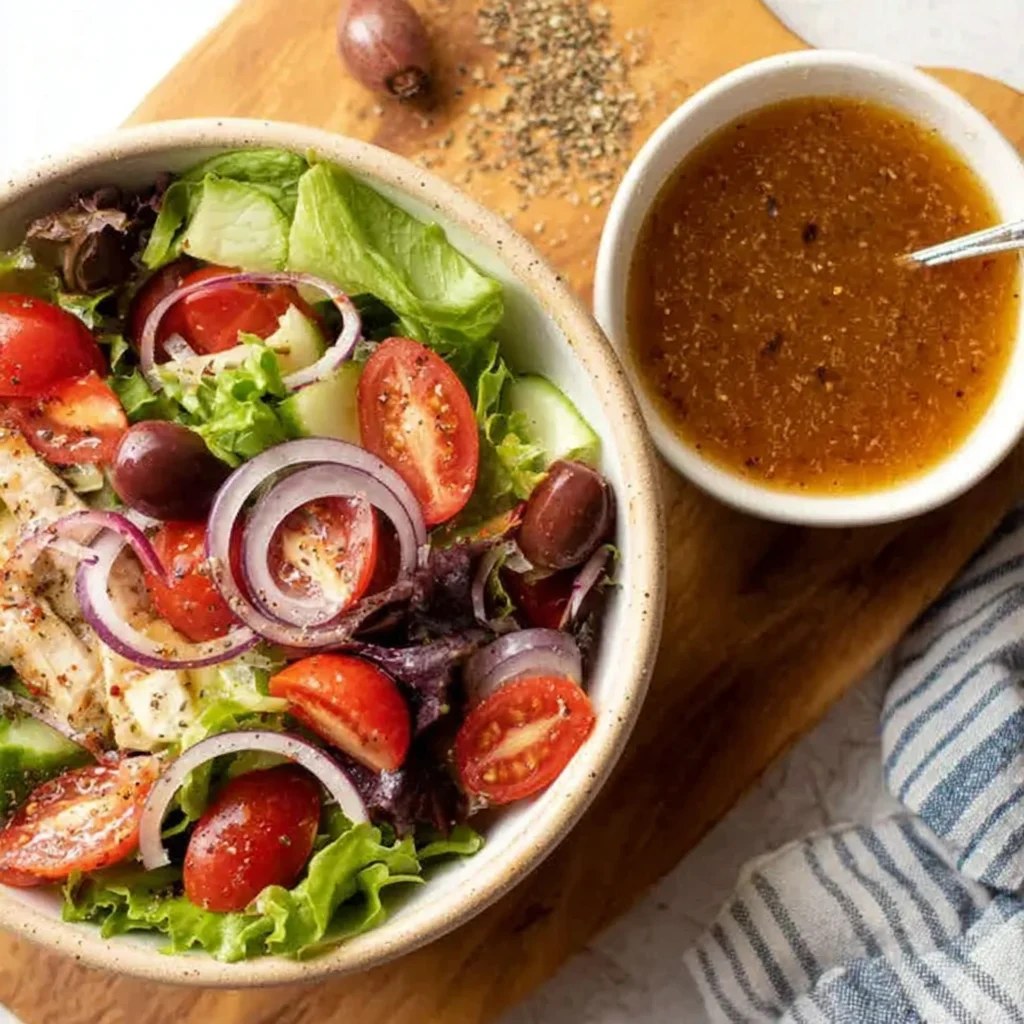
Here’s where technique matters most. While whisking continuously, slowly drizzle in the olive oil in a thin, steady stream. This gradual incorporation prevents the dressing from separating and creates a beautifully emulsified mixture. You’ll see the dressing transform from thin and watery to glossy and cohesive. The color should be golden with tiny flecks of green oregano throughout.
4. Season to Perfection
Add salt and freshly cracked black pepper, starting with ½ teaspoon salt and ¼ teaspoon pepper. Taste and adjust – the dressing should be bright and tangy with a pleasant saltiness that enhances rather than overpowers. The lemon should sing without being too sharp, balanced by the fruity olive oil.
5. Let the Flavors Meld
Transfer your Greek dressing to a jar or airtight container and let it sit for at least 10 minutes before serving. This resting time allows the garlic to mellow slightly and the oregano to bloom, creating that authentic taverna taste. Give it a good shake before drizzling over your salad.
Nutritional Information
Per 2-tablespoon serving: approximately 120 calories, 13g fat, 1g carbohydrates, 0g protein. Rich in heart-healthy monounsaturated fats from olive oil and vitamin C from fresh lemon juice. Values are approximate and may vary based on specific ingredients used.
Serving Suggestions
This versatile dressing elevates classic Greek salads with tomatoes, cucumbers, and feta, but also works beautifully on grilled vegetables or as a marinade for chicken. Drizzle generously – about 2 tablespoons per serving of salad. For best flavor, add the dressing just before serving to keep vegetables crisp.
Common Mistakes to Avoid
Adding oil too quickly: This breaks the emulsion, leaving you with a separated, oily mess. Always stream slowly while whisking. Using poor-quality olive oil: Since olive oil is the star here, choose a good extra virgin variety with fruity notes. Over-salting: Start conservatively – you can always add more, but you can’t take it back. Skipping the resting time: Those flavors need time to marry for the best taste experience.
Storing Tips
Store your homemade Greek salad dressing in the refrigerator for up to one week in an airtight container. The olive oil may solidify when cold, so let it come to room temperature for 10 minutes before using, then shake well to re-emulsify.
Conclusion
This authentic Greek salad dressing brings the sunny flavors of the Mediterranean to your table in minutes. Once you taste this fresh, vibrant vinaigrette, you’ll never go back to bottled versions. Give this recipe a try and let me know how it transforms your salads!
FAQs
Can I make this dressing without garlic?
Absolutely! Simply omit the garlic for a milder flavor profile. You can add a pinch of garlic powder if you want just a subtle hint.
Why does my dressing separate?
This happens when the oil is added too quickly or the mixture isn’t whisked enough. Simply re-whisk vigorously or blend briefly to re-emulsify.
Can I use dried lemon juice?
Fresh lemon juice is crucial for authentic flavor and proper acidity balance. Bottled juice often contains preservatives that affect taste and texture.
How do I know if my olive oil is good quality?
Look for “extra virgin” on the label and a harvest date within the past two years. Good olive oil should smell fruity and slightly grassy.
Can this dressing be frozen?
Freezing isn’t recommended as it will break the emulsion and change the texture. Stick to refrigerator storage for best results. For more Mediterranean inspiration, check out this recipe collection.
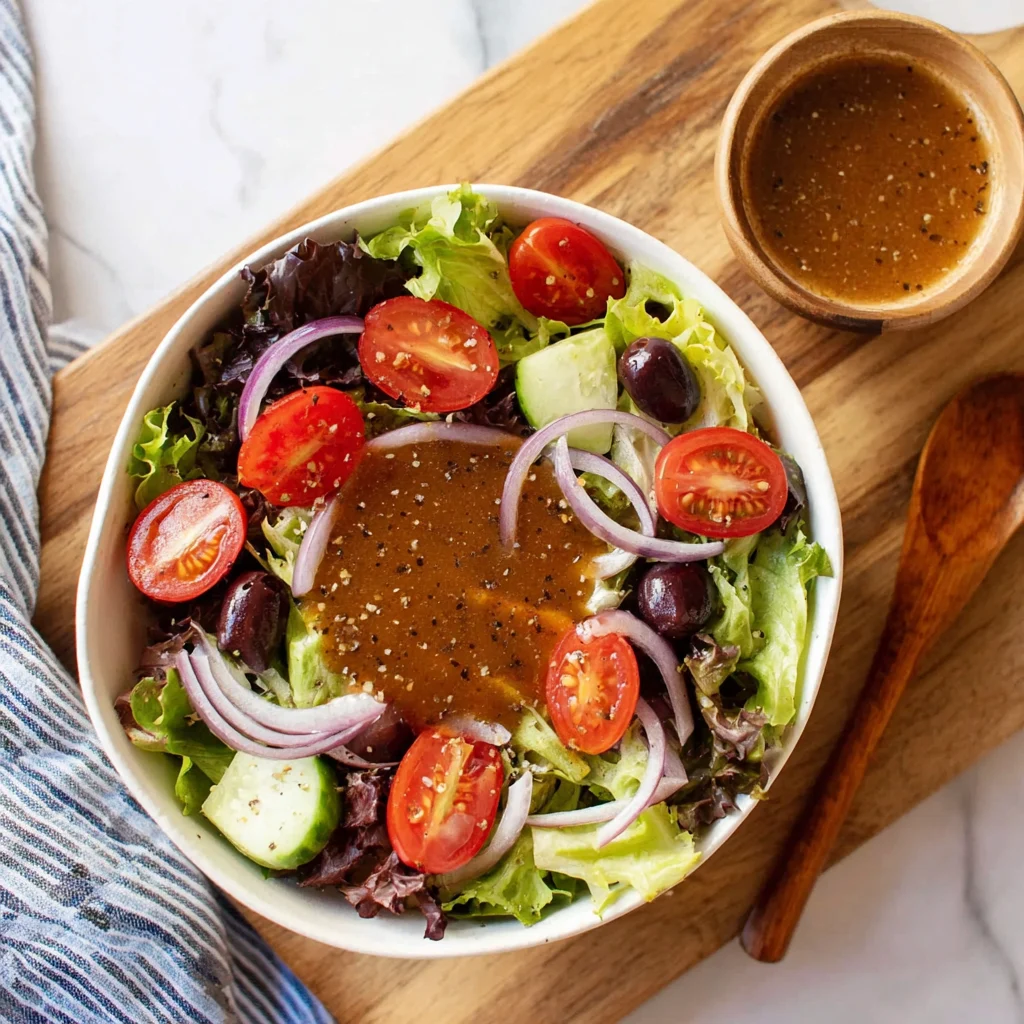
Greek Salad Dressing
Ingredients
Method
- Start by whisking together the lemon juice, red wine vinegar, and Dijon mustard in a small bowl. The mustard acts as an emulsifier, helping create that silky smooth texture. Whisk until the mixture becomes slightly creamy.
- Stir in the minced garlic and dried oregano. Make sure the garlic is minced finely to distribute evenly throughout the dressing.
- While whisking continuously, slowly drizzle in the olive oil in a thin, steady stream. This gradual incorporation prevents the dressing from separating and creates a beautifully emulsified mixture with a golden color and green oregano flecks.
- Add salt and freshly cracked black pepper, starting with ½ teaspoon salt and ¼ teaspoon pepper. Taste and adjust seasoning – the dressing should be bright and tangy with pleasant saltiness.
- Transfer the Greek dressing to a jar or airtight container and let it sit for at least 10 minutes before serving to allow flavors to meld. Give it a good shake before drizzling over salad.