
Please ensure this is a healthy and easy recipe by simplifying the ingredients and presenting clear, approachable steps. The tone should remain conversational and engaging throughout.
Introduction
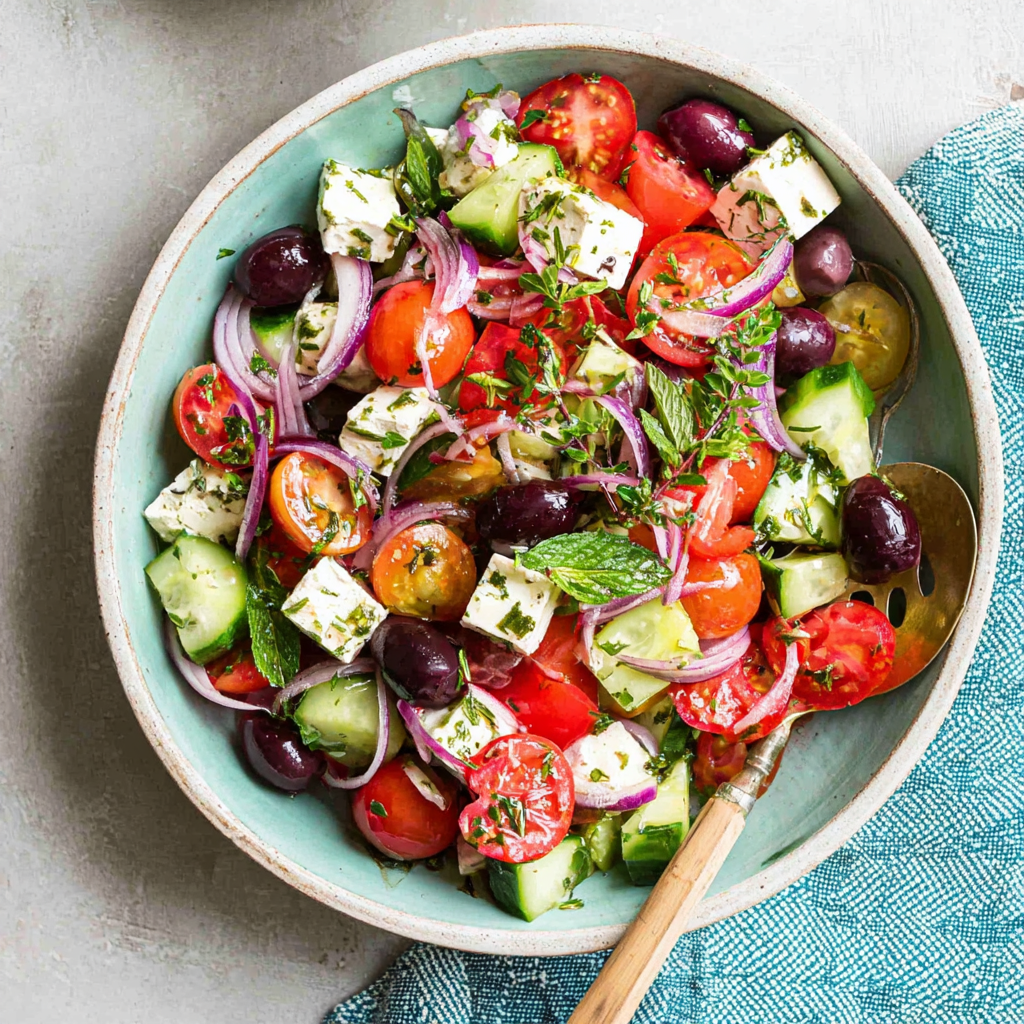
There's something magical about the way a perfectly crafted Greek salad brings together simple, fresh ingredients to create pure Mediterranean bliss. This authentic greek salad recipe transports you straight to a sun-drenched taverna overlooking the Aegean Sea, where every bite celebrates the essence of Greek cuisine. Known locally as "Horiatiki," this traditional village salad has been gracing Greek tables for generations, proving that the most extraordinary flavors often come from the simplest combinations.
What makes this greek salad recipe truly special is its commitment to authentic ingredients and time-honored techniques. Unlike many Western adaptations, a true Greek salad never includes lettuce – instead, it showcases chunky tomatoes, crisp cucumbers, briny olives, and creamy feta cheese, all brought together with a golden olive oil dressing that's both rustic and refined. The beauty lies in the quality of each ingredient, allowing their natural flavors to shine while creating a harmonious symphony of Mediterranean tastes that will have you coming back for more.
Ingredients List
This authentic greek salad recipe relies on just a handful of premium ingredients that work together beautifully:
Base Vegetables:
- 4 large ripe tomatoes, cut into chunky wedges
- 2 medium cucumbers, sliced into thick rounds
- 1 large red onion, thinly sliced into half-moons
- 1 green bell pepper, cut into strips
Mediterranean Essentials:
- 8 oz block of authentic Greek feta cheese
- 1 cup Kalamata olives, pitted
- 2 tablespoons fresh oregano (or 1 tablespoon dried Greek oregano)
Golden Dressing:
- 1/2 cup extra virgin olive oil (preferably Greek)
- 3 tablespoons red wine vinegar
- 1 clove garlic, minced
- 1/2 teaspoon sea salt
- 1/4 teaspoon freshly ground black pepper
Substitution Options:
For those with dietary restrictions, you can substitute vegan feta for traditional cheese, use apple cider vinegar instead of red wine vinegar, or swap yellow bell pepper for green. However, for the most authentic experience, stick with the traditional ingredients whenever possible.
Timing
This refreshing greek salad recipe is wonderfully quick and efficient to prepare:
Prep Time: 15 minutes
Assembly Time: 5 minutes
Total Time: 20 minutes
The beauty of this dish lies in its simplicity – there's no cooking required! Spend the first 10 minutes washing and chopping your vegetables, then 5 minutes preparing your dressing. The final assembly takes just moments, making this perfect for busy weeknight dinners or last-minute entertaining.
Time-Saving Tips: Vegetables can be chopped up to 4 hours ahead and stored separately in the refrigerator. The dressing can be made days in advance and kept in a sealed jar. For optimal freshness, combine everything just before serving to prevent the salad from becoming watery.
How to Make It
1. Prepare Your Vegetables
Start by washing all your vegetables thoroughly under cold running water. Cut the tomatoes into generous wedges – about 8 pieces per tomato works perfectly. The key is making chunks large enough to hold their shape while still being fork-friendly. Slice your cucumbers into thick rounds, about 1/2 inch thick, leaving the skin on for extra crunch and nutrients.
2. Slice the Aromatics
Thinly slice your red onion into elegant half-moons. If you find raw onion too sharp, soak the slices in cold water for 10 minutes, then pat dry – this mellows the bite while maintaining the crunch. Cut your bell pepper into strips, removing all seeds and white pith for the cleanest flavor.
3. Create the Dressing
In a small bowl, whisk together the olive oil, red wine vinegar, minced garlic, salt, and pepper. The mixture should emulsify slightly, creating a golden, aromatic dressing. Taste and adjust seasoning – Greek cuisine celebrates bold flavors, so don't be shy with the olive oil and oregano.
4. Assemble with Care
In a large, shallow serving bowl, gently combine the tomatoes, cucumbers, onions, and bell pepper. Drizzle with your prepared dressing and toss very lightly – you want to coat the vegetables without bruising the delicate tomatoes.
5. Add the Stars
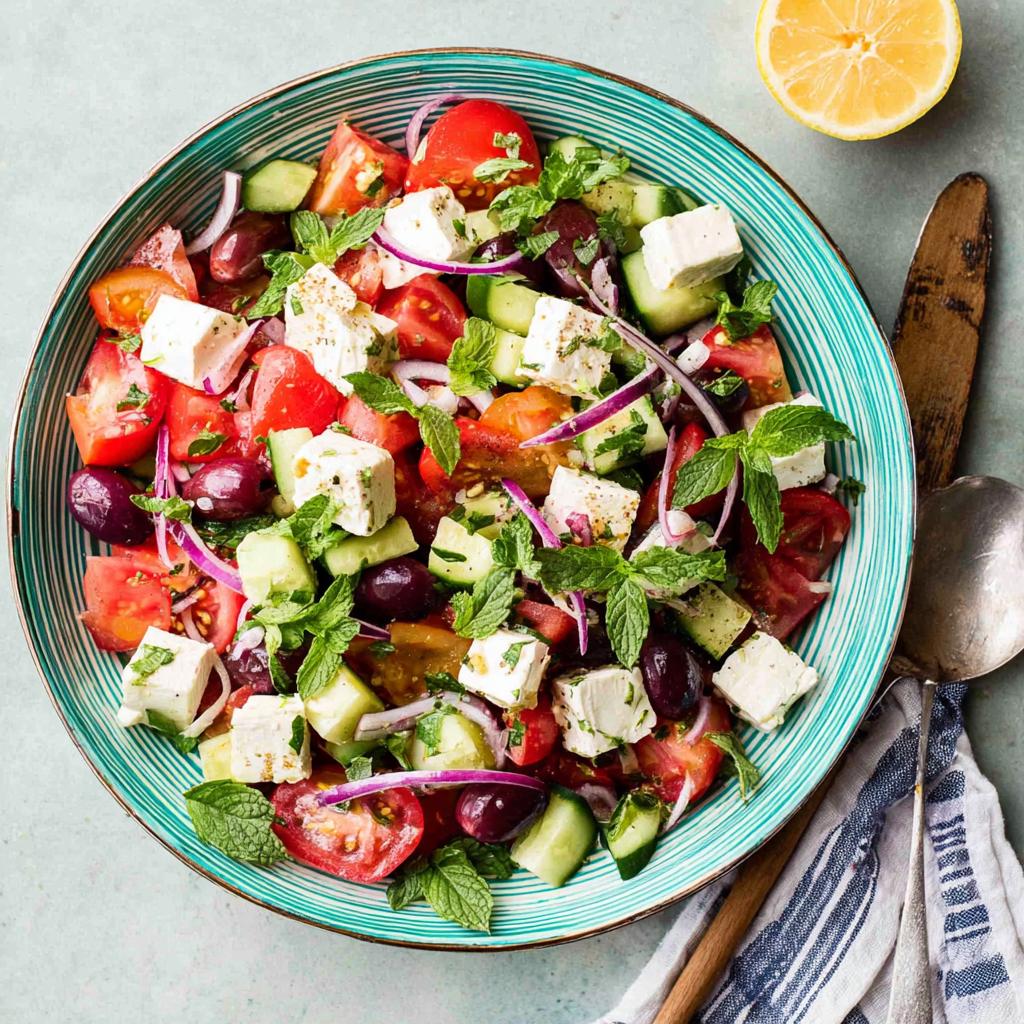
Top your dressed vegetables with the feta cheese, either crumbled into large chunks or left as one impressive block in the center (the traditional way). Scatter the Kalamata olives throughout and finish with a generous sprinkle of oregano. The final result should look abundant and rustic.
Nutritional Information
This wholesome greek salad recipe provides approximately 280-320 calories per generous serving, making it both satisfying and nutritious. Each portion delivers healthy monounsaturated fats from olive oil and olives, high-quality protein and calcium from feta cheese, and plenty of vitamins C and K from the fresh vegetables.
The combination of tomatoes and olive oil enhances lycopene absorption, while the cucumbers provide hydration and fiber. Feta cheese contributes probiotics and protein, making this salad a complete, balanced meal. The high water content of the vegetables combined with healthy fats helps promote satiety without excessive calories.
This dish naturally fits into Mediterranean, vegetarian, and gluten-free dietary patterns. It's also naturally low in refined carbohydrates while being rich in antioxidants from the colorful vegetables and herbs.
Healthier Alternatives for the Recipe
Transform this greek salad recipe to meet various dietary needs without sacrificing authentic flavors. For a lower-calorie version, reduce the olive oil to 1/4 cup and add a splash of fresh lemon juice for brightness. Use a smaller amount of feta or opt for reduced-fat versions.
Those following vegan diets can substitute plant-based feta or crumbled firm tofu marinated in olive oil, lemon juice, and nutritional yeast. For additional protein, add chickpeas or white beans to make it more substantial.
Reduce sodium by using fewer olives and less salt in the dressing, instead boosting flavor with fresh herbs like basil, parsley, or mint. You can also add heart-healthy elements like avocado slices or pumpkin seeds for extra nutrients and texture.
Serving Suggestions
This versatile greek salad recipe shines as both a light main course and a vibrant side dish. Serve it alongside grilled fish, chicken souvlaki, or lamb for an authentic Mediterranean feast. It pairs beautifully with warm pita bread, hummus, and tzatziki for a complete Greek mezze experience.
For a heartier meal, serve over quinoa or bulgur wheat, or alongside grilled halloumi cheese. During summer months, this salad is perfect for picnics and barbecues – just pack the dressing separately and toss right before serving.
Present it family-style in a large, shallow bowl to showcase the beautiful colors, or portion into individual bowls for more formal dining. A crisp white wine like Assyrtiko or a light rosé complements the fresh flavors perfectly.
Common Mistakes to Avoid
The biggest mistake when making this greek salad recipe is over-dressing the vegetables too early, which causes them to release water and dilute flavors. Always dress just before serving for optimal texture and taste.
Avoid using bland, out-of-season tomatoes – they're the star of this dish, so choose the ripest, most flavorful ones available. Don't substitute regular black olives for Kalamata olives, as they lack the distinctive briny flavor essential to authentic taste.
Never add lettuce to a traditional Greek salad, and resist the urge to over-mix once assembled. The vegetables should maintain their distinct shapes and textures rather than becoming mushy from excessive tossing.
Storing Tips for the Recipe
Store leftover greek salad recipe components separately for best results. Keep chopped vegetables in airtight containers in the refrigerator for up to 2 days, though tomatoes are best used within 24 hours for optimal flavor and texture.
The dressing keeps well in a sealed jar in the refrigerator for up to one week – just shake well before using. Feta cheese should remain in its brine or wrapped tightly in the refrigerator.
If you must store assembled salad, consume within 2-3 hours for best quality. The vegetables will release water over time, so drain excess liquid before serving leftovers. This salad doesn't freeze well due to the high water content of the vegetables.
Conclusion
This authentic greek salad recipe proves that the most memorable dishes often come from the simplest ingredients prepared with care and respect for tradition. Every element works in perfect harmony – from the sweet acidity of ripe tomatoes to the creamy saltiness of quality feta cheese.
The beauty of this dish lies not just in its vibrant colors and fresh flavors, but in its ability to transport you to the Greek islands with every bite. Whether you're planning a Mediterranean-themed dinner party or simply craving something fresh and healthy, this timeless recipe delivers satisfaction without complexity.
Give this traditional greek salad recipe a try, and don't hesitate to share your own variations or favorite serving suggestions – the joy of cooking is always better when shared with others!
FAQs
Can I make Greek salad ahead of time?
You can prep all ingredients up to 4 hours ahead, but assemble and dress the salad just before serving to prevent vegetables from becoming watery and losing their crisp texture.
What's the difference between Greek feta and regular feta cheese?
Authentic Greek feta is made from sheep's or goat's milk and has a creamier, more complex flavor than cow's milk versions. It's typically stored in brine, which keeps it moist and adds to its characteristic tangy taste.
Can I substitute different vegetables in this recipe?
While you can add vegetables like cherry tomatoes or English cucumbers, avoid changing the core components (tomatoes, cucumbers, onions, peppers) as they define the authentic flavor profile of traditional Greek salad.
How do I prevent the salad from getting soggy?
Salt the tomato wedges lightly and let them drain for 10 minutes before assembling, pat cucumbers dry after slicing, and always add dressing just before serving.
Is this salad gluten-free?
Yes, this authentic greek salad recipe is naturally gluten-free. Just ensure your feta cheese and any additional seasonings don't contain gluten-containing additives.
How long does Greek salad last in the refrigerator?
Once assembled and dressed, consume within 2-3 hours for best quality. Store individual components separately for up to 2 days, then assemble fresh portions as needed.