
Introduction
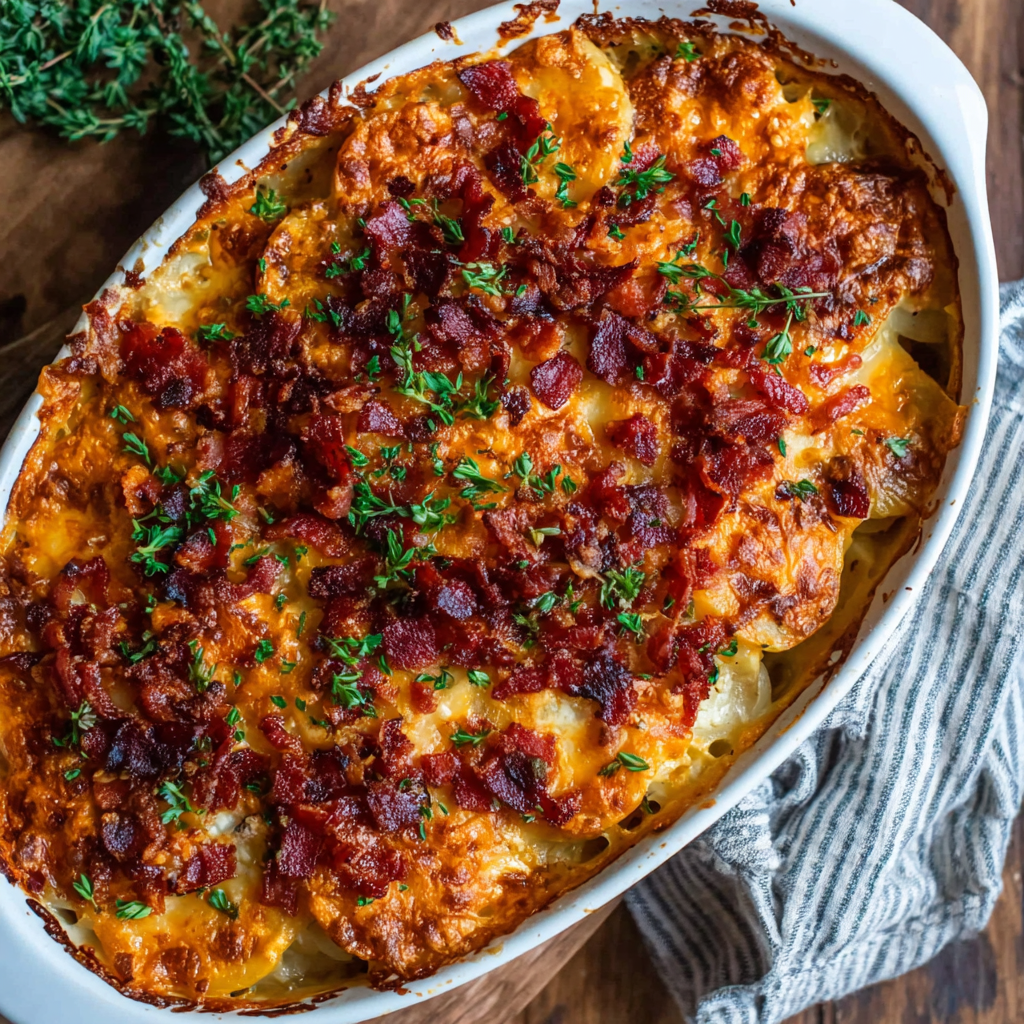
There's something magical about the way loaded scalloped potatoes fill your kitchen with the most incredible aroma – that perfect blend of creamy cheese, tender potatoes, and savory toppings that makes everyone gather around the table. This comforting dish takes the classic French gratin dauphinoise and gives it an American twist, loading it up with bacon, cheese, and all those irresistible flavors we crave.
What makes loaded scalloped potatoes so special is their ability to transform a simple gathering into a memorable feast. The layers of paper-thin potato slices swimming in rich, velvety cream sauce create a dish that's simultaneously elegant and utterly satisfying. Whether you're planning a holiday dinner, Sunday family meal, or just want to treat yourself to something extraordinary, this recipe delivers restaurant-quality results right from your own kitchen. The best part? Once you master this technique, you'll have a show-stopping side dish that pairs beautifully with everything from roasted meats to simple grilled vegetables.
Ingredients List
Base Ingredients:
- 3 pounds Yukon Gold potatoes, peeled and sliced 1/8-inch thick
- 2 cups heavy cream
- 1 cup whole milk
- 3 tablespoons all-purpose flour
- 4 tablespoons butter
- 1 large onion, thinly sliced
Cheese & Flavor:
- 2 cups sharp cheddar cheese, freshly grated
- 1 cup Gruyere cheese, grated
- 1/2 cup Parmesan cheese, grated
- 3 cloves garlic, minced
- 1 teaspoon fresh thyme leaves
- 1/2 teaspoon smoked paprika
Loaded Toppings:
- 8 strips thick-cut bacon, cooked and crumbled
- 4 green onions, chopped
- 1/2 cup sour cream (for serving)
- Salt and freshly ground black pepper to taste
Substitution Options:
For a lighter version, substitute half-and-half for heavy cream. Vegetarians can skip the bacon and add roasted mushrooms or caramelized onions. Those avoiding gluten can use cornstarch instead of flour. For dairy-free needs, try cashew cream and nutritional yeast, though the texture will differ slightly.
Timing
Total Time: 2 hours 15 minutes
- Prep Time: 30 minutes
- Cooking Time: 1 hour 45 minutes
Time Management Tips:
Start by preheating your oven and slicing potatoes first – this prevents them from browning while you prepare other components. Cook the bacon early and set aside, using the same pan for sautéing onions to save cleanup time. The cream sauce can be made while potatoes are draining.
Make-Ahead Suggestions:
Assemble the entire dish up to 24 hours in advance, cover tightly, and refrigerate. Add an extra 15-20 minutes to baking time if cooking from cold. You can also prep individual components – slice potatoes and store in water, make the cream sauce, and cook bacon – then assemble when ready to bake.
How to Make It
1. Prepare the Potatoes
Slice your potatoes using a mandoline slicer or sharp knife to achieve uniform 1/8-inch thickness. This consistency ensures even cooking throughout every layer. Rinse the sliced potatoes in cold water to remove excess starch, then pat completely dry with clean kitchen towels. This step prevents the dish from becoming gluey and helps achieve that perfect creamy texture.
2. Make the Cream Sauce
In a heavy-bottomed saucepan, melt butter over medium heat. Whisk in flour and cook for 2 minutes until golden and fragrant – this removes the raw flour taste. Gradually add cream and milk while whisking constantly to prevent lumps. Add minced garlic, thyme, smoked paprika, salt, and pepper. Simmer until the sauce coats the back of a spoon, about 5-7 minutes.
3. Layer the Foundation
Butter a 9×13-inch baking dish generously. Arrange one-third of the potato slices in overlapping layers, like fallen dominoes. Season with salt and pepper, then scatter half the sautéed onions and one-third of the cheese mixture. Pour one-third of the cream sauce evenly over the layer, ensuring it seeps between the potatoes.
4. Build the Layers
Repeat the layering process twice more: potatoes, seasonings, onions (for the second layer), cheese, and cream sauce. Press down gently with a spatula to help the sauce distribute evenly. The top layer should be your most beautiful potato arrangement, as this will be visible in the final presentation.
5. Bake to Golden Perfection
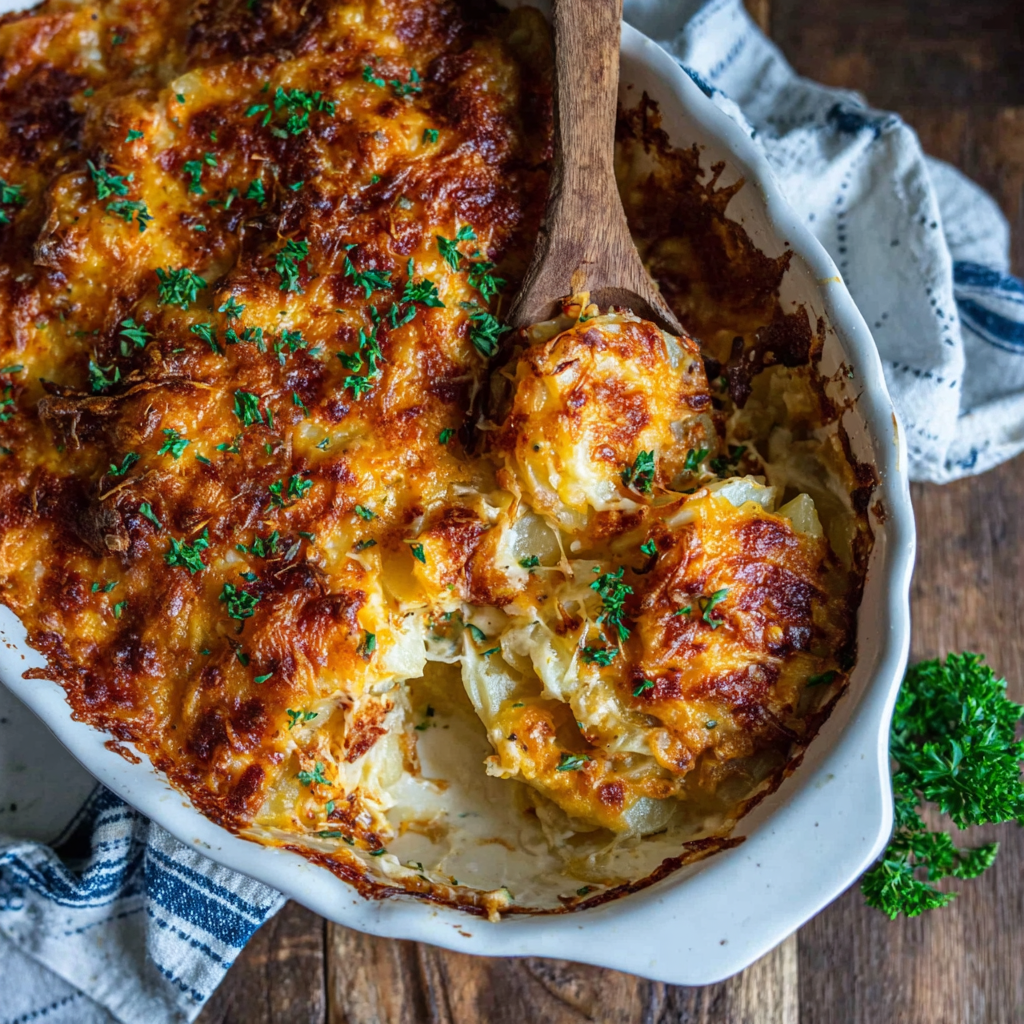
Cover tightly with foil and bake at 375°F for 1 hour. Remove foil and continue baking for 30-45 minutes until the top is golden brown and bubbling around the edges. A knife should slide through the center with minimal resistance. Let rest for 15 minutes before serving – this allows the layers to set properly.
6. Add the Loaded Toppings
Just before serving, sprinkle the crispy bacon crumbles and chopped green onions over the golden surface. The residual heat will warm these toppings perfectly. Serve with dollops of sour cream on the side for that authentic loaded potato experience.
Nutritional Information
Per serving (based on 8 servings):
- Calories: Approximately 420-450
- Protein: 16-18g from cheese, bacon, and milk
- Carbohydrates: 28-32g primarily from potatoes
- Fat: 28-32g from cream, cheese, and bacon
- Fiber: 3-4g from potato skins and onions
- Calcium: Significant amounts from dairy ingredients
- Potassium: High levels from potatoes supporting heart health
Health Benefits:
Potatoes provide essential vitamins C and B6, while the dairy components contribute calcium and protein. The dish offers sustained energy from complex carbohydrates. When enjoyed as part of a balanced meal with vegetables and lean proteins, it contributes valuable nutrients to your diet.
Note: Nutritional values are approximate and may vary based on specific ingredients and portion sizes used.
Healthier Alternatives for the Recipe
Lower Calorie Options:
Replace heavy cream with a mixture of low-fat milk and Greek yogurt, or use half-and-half throughout. Reduce cheese quantities by one-third and add extra herbs for flavor depth. Turkey bacon provides similar smoky taste with less fat than traditional bacon.
Dairy-Free Adaptations:
Substitute cashew cream or full-fat coconut milk for dairy cream. Use nutritional yeast and dairy-free cheese alternatives. The texture will be slightly different but still deliciously creamy.
Gluten-Free Version:
Simply replace all-purpose flour with cornstarch or gluten-free flour blend. The thickening power remains the same, ensuring your sauce achieves the perfect consistency.
Vegetarian Modifications:
Omit bacon and add roasted mushrooms, caramelized onions, or sun-dried tomatoes for umami depth. Smoked paprika and liquid smoke can provide that desired smoky flavor without meat.
Serving Suggestions
Perfect Pairings:
These loaded scalloped potatoes shine alongside roasted prime rib, herb-crusted pork tenderloin, or grilled chicken. The creamy richness complements the char and seasoning of grilled meats beautifully. For vegetarian meals, serve with roasted vegetables and a crisp green salad.
Presentation Ideas:
Serve directly from the baking dish for rustic family-style dining, or cut into neat squares for more elegant plating. Garnish individual portions with fresh chive blossoms or microgreens for color contrast.
Seasonal Variations:
In fall, add thinly sliced apples between layers. Summer versions benefit from fresh corn kernels and cherry tomatoes. During holidays, incorporate truffle oil or wild mushrooms for extra luxury.
Portion Guidance:
Plan for generous 3/4-cup servings as a side dish, or larger portions if serving as a main course with salad.
Common Mistakes to Avoid
Inconsistent Potato Slicing:
Uneven thickness leads to some pieces being mushy while others remain hard. Invest time in uniform slicing or use a mandoline for consistent results.
Watery Results:
This happens when potatoes aren't dried properly after rinsing, or when the cream sauce isn't thick enough before assembly. Always pat potatoes dry and ensure your sauce coats a spoon.
Curdled Cream Sauce:
Adding liquid too quickly or using excessive heat causes curdling. Keep heat at medium and add liquids gradually while whisking constantly.
Overbaking:
Watch for golden-brown color rather than relying solely on time. Overbaked potatoes become dry and lose their creamy texture.
Skipping the Rest Period:
Cutting immediately after baking results in a soupy mess. The 15-minute rest allows layers to set and makes serving much easier.
Storing Tips for the Recipe
Refrigerator Storage:
Cool completely before covering with plastic wrap or transferring to airtight containers. Properly stored loaded scalloped potatoes keep for 3-4 days in the refrigerator.
Reheating Instructions:
Reheat covered portions in a 350°F oven for 20-25 minutes until heated through. Microwave individual servings on medium power to prevent separation. Add a splash of cream if the mixture seems dry after reheating.
Freezer Storage:
While possible, freezing affects the cream sauce texture. If freezing, wrap tightly and use within 2 months. Thaw completely in the refrigerator before reheating, and expect a slightly different consistency.
Make-Ahead Strategy:
Assemble completely but don't bake. Cover tightly and refrigerate up to 24 hours. Bring to room temperature for 30 minutes before baking as directed, adding 10-15 minutes to cooking time if needed.
Conclusion
Loaded scalloped potatoes represent comfort food at its finest – layers of creamy, cheesy goodness that bring people together around the dinner table. This recipe transforms humble potatoes into something truly spectacular, worthy of your most special occasions while remaining approachable enough for weekend family dinners.
The beauty of this dish lies in its versatility and make-ahead friendly nature, making it perfect for entertaining without stress. Once you master the technique of layering and timing, you'll find yourself turning to this recipe again and again.
I encourage you to make this recipe your own by experimenting with different cheese combinations or adding your favorite loaded potato toppings. Share your creative variations and let me know how this dish becomes part of your family's favorite meal memories.
FAQs
Can I make loaded scalloped potatoes ahead of time?
Absolutely! Assemble the dish completely up to 24 hours in advance and refrigerate covered. Allow it to come to room temperature for 30 minutes before baking, and add 10-15 extra minutes to the cooking time.
What's the best potato variety for this recipe?
Yukon Gold potatoes work best due to their creamy texture and ability to hold their shape. Russet potatoes can be used but may break down more during cooking, creating a different texture.
How do I prevent the cream sauce from curdling?
Keep your heat at medium level and add liquids gradually while whisking constantly. If curdling begins, remove from heat immediately and whisk vigorously, or strain the sauce through a fine-mesh sieve.
Can I substitute different cheeses?
Certainly! Try combinations like sharp cheddar with smoked gouda, or add cream cheese for extra richness. Avoid pre-shredded cheese when possible, as anti-caking agents can affect melting.
Why are my scalloped potatoes watery?
This usually happens when potatoes aren't dried properly after rinsing, or the cream sauce wasn't thick enough initially. Always pat potatoes completely dry and ensure your sauce coats the back of a spoon before assembly.
How do I know when the dish is fully cooked?
The top should be golden brown and bubbling around edges. A knife inserted in the center should meet minimal resistance, and the internal temperature should reach 165°F for food safety.