Introduction
Growing up, Sunday mornings meant one thing in our house: Dad’s famous pancakes. He had this uncanny ability to whip up the fluffiest stack even when our refrigerator looked like a barren wasteland. His secret wasn’t some fancy technique or expensive ingredients – it was knowing that great pancakes come from understanding how simple ingredients work together, not from following rigid rules about what “must” be included.
This pancake recipe without milk draws inspiration from that same philosophy. Throughout culinary history, pancakes have appeared in countless variations across different cultures, many of which never relied on dairy products. From French crepes made with water to Asian-style pancakes using plant-based liquids, the world of pancakes extends far beyond our typical milk-dependent versions.
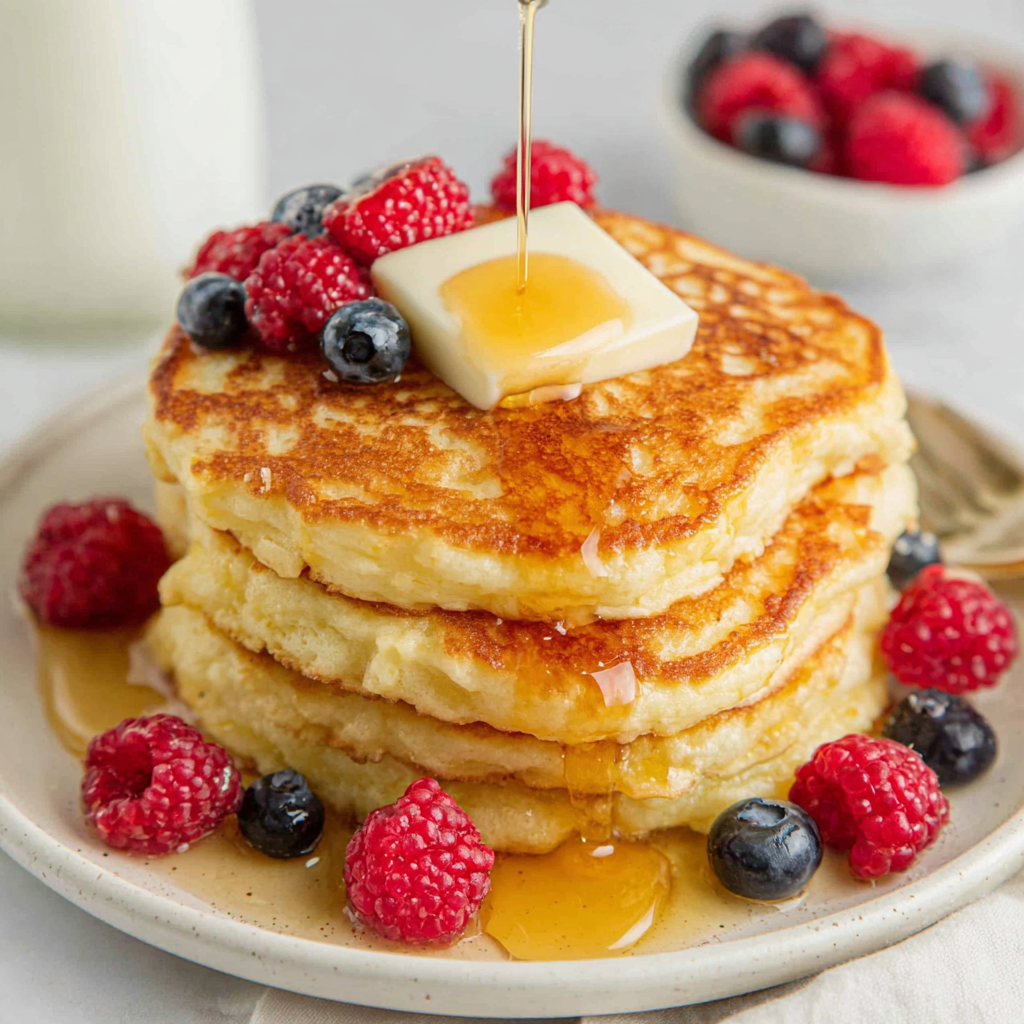
What makes this particular recipe special is how it maintains that beloved fluffy texture while offering incredible versatility. The absence of milk doesn’t mean sacrificing taste or quality – instead, it opens up opportunities for richer flavors and interesting variations. You’ll discover that these pancakes cook up beautifully golden, taste wonderfully satisfying, and provide the perfect canvas for your favorite toppings.
Ingredients List
Base Ingredients:
- 1½ cups all-purpose flour
- 2 tablespoons granulated sugar
- 2 teaspoons baking powder
- ½ teaspoon salt
- 2 large eggs
- 1¼ cups water (or substitute liquid – see options below)
- 3 tablespoons melted butter or vegetable oil
- 1 teaspoon vanilla extract
Liquid Substitution Options:
- Unsweetened almond milk for nutty richness
- Coconut milk for tropical sweetness
- Oat milk for creamy texture
- Apple juice for subtle fruity notes
- Plain sparkling water for extra lift
Optional Flavor Enhancers:
- 1 tablespoon lemon juice (brightens flavor)
- ½ teaspoon cinnamon
- 1 tablespoon cocoa powder for chocolate variation
- Fresh berries or chocolate chips for mixing in
The beauty of this recipe lies in its adaptability. Each liquid substitute brings its own character to the pancakes while maintaining the essential structure that creates those perfectly tender, fluffy results we’re after.
Timing
Preparation Time: 8 minutes
Cooking Time: 12-15 minutes
Total Time: 20-23 minutes
Serves: 4 people (approximately 12 medium pancakes)
Time management tip: While your pan heats up, use those few minutes to set up your toppings and warm your syrup. This recipe moves quickly once you start cooking, so having everything ready makes the process smooth and enjoyable.
For busy mornings, you can mix the dry ingredients the night before and store them in an airtight container. In the morning, simply add the wet ingredients and cook – reducing your prep time to just 3-4 minutes.
How to Make It
1. Prepare Your Dry Mix
In a large mixing bowl, whisk together flour, sugar, baking powder, and salt until evenly combined. This initial whisking ensures your leavening agents distribute evenly, preventing dense spots in your finished pancakes.
2. Combine Wet Ingredients
In a separate bowl or large measuring cup, beat the eggs thoroughly, then add your chosen liquid, melted butter (or oil), and vanilla extract. The key here is having your wet ingredients at room temperature for the smoothest mixing.
3. Create the Batter
Pour the wet ingredients into the dry mixture and stir gently with a wooden spoon or spatula. Stop mixing as soon as you no longer see dry flour – the batter should look slightly lumpy. Overmixing develops the gluten, resulting in tough, chewy pancakes instead of tender ones.
4. Rest the Batter
Let your batter sit for 3-4 minutes while your pan heats. This brief rest allows the flour to fully hydrate and the baking powder to start working, contributing to fluffier results.
5. Heat Your Cooking Surface
Preheat a non-stick pan or griddle over medium heat. Test the temperature by sprinkling a few drops of water on the surface – they should dance and evaporate quickly. Lightly grease with butter or oil.
6. Cook the Pancakes
Pour ¼ cup of batter per pancake onto the hot surface. Cook until bubbles form across the surface and the edges look set, about 2-3 minutes. Flip carefully and cook for another 1-2 minutes until golden brown.
7. Keep Warm and Serve
Transfer finished pancakes to a 200°F oven to keep warm while you finish cooking the batch, or serve immediately for the ultimate fluffy experience.
Nutritional Information
Per serving (3 pancakes), these dairy-free pancakes provide approximately:
- Calories: 285-320 (depending on liquid choice)
- Protein: 8-10g
- Carbohydrates: 45-50g
- Fat: 8-12g
- Fiber: 2-3g
The nutritional profile varies based on your liquid substitute choice. Almond milk versions tend to be lower in calories, while coconut milk adds healthy fats. Using water keeps the calorie count at the lower end while still delivering satisfying results.
These pancakes provide sustained energy from complex carbohydrates and complete proteins from eggs. The absence of dairy makes them suitable for lactose-intolerant individuals while maintaining essential nutrients.
Healthier Alternatives for the Recipe
For Lower Calories: Replace half the all-purpose flour with almond flour, use unsweetened almond milk as your liquid, and substitute applesauce for half the oil. This reduces calories while adding fiber and nutrients.
Gluten-Free Version: Use a 1:1 gluten-free flour blend in place of all-purpose flour. Add an extra ¼ teaspoon of xanthan gum if your blend doesn’t include it for better binding.
Protein-Packed Option: Add 2 tablespoons of protein powder to the dry ingredients and increase liquid by 2-3 tablespoons. Vanilla or unflavored protein works best without affecting taste.
Whole Grain Boost: Replace up to half the all-purpose flour with whole wheat pastry flour for added fiber and nutrients without significantly affecting texture.
Serving Suggestions
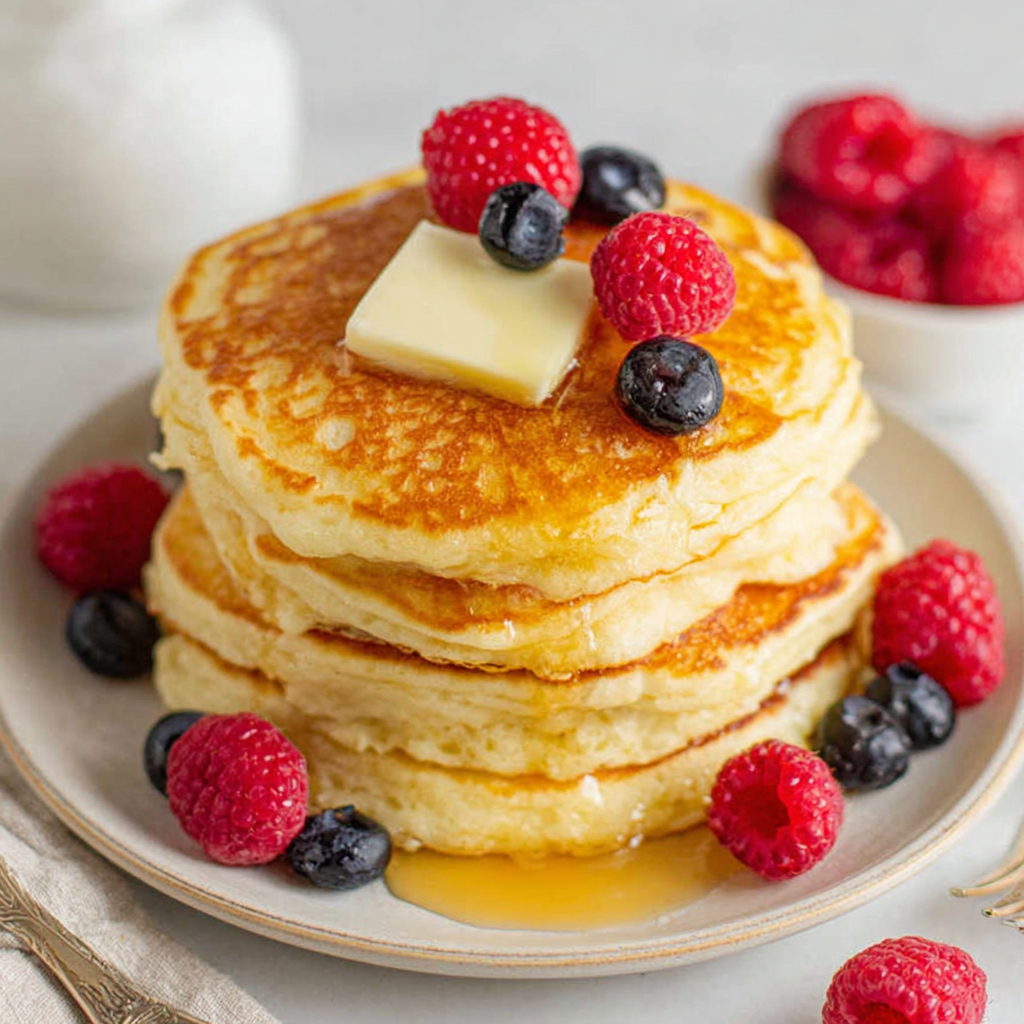
These versatile pancakes pair beautifully with both classic and creative toppings. Fresh berries and pure maple syrup never disappoint, while sliced bananas with a drizzle of honey offer natural sweetness.
For special occasions, try layering pancakes with Greek yogurt and fresh fruit for an elegant presentation. Nut butters spread between warm pancakes create an indulgent twist that feels like dessert for breakfast.
Consider seasonal variations: autumn calls for sautéed apples with cinnamon, while summer begs for fresh peach slices and a sprinkle of granola. A light dusting of powdered sugar transforms any stack into something special.
Common Mistakes to Avoid
Overmixing the Batter: This is the most common error that leads to tough, dense pancakes. Mix just until flour disappears – lumps are perfectly fine and will cook out.
Wrong Pan Temperature: Too hot and your pancakes burn before cooking through; too cool and they won’t develop that golden exterior. Medium heat with proper preheating is key.
Pressing Down While Cooking: Resist the urge to flatten pancakes with your spatula. This squeezes out air bubbles that create fluffiness.
Flipping Too Early: Wait for those bubbles to form and edges to set. Premature flipping often results in broken, unevenly cooked pancakes.
Storing Tips for the Recipe
Refrigerator Storage: Store leftover pancakes in an airtight container for up to 3 days. Place parchment paper between layers to prevent sticking.
Freezer Storage: These pancakes freeze beautifully for up to 2 months. Cool completely, then freeze in single layers on baking sheets before transferring to freezer bags.
Reheating Instructions: Toast frozen pancakes directly in a toaster or toaster oven for best texture. For refrigerated pancakes, warm in a 300°F oven for 5-7 minutes or microwave for 30-45 seconds.
Make-Ahead Batter: The batter can be prepared the night before and stored in the refrigerator. Give it a gentle stir before cooking, and you might need to thin it slightly with extra liquid.
Conclusion
This pancake recipe without milk proves that some of life’s best discoveries happen when we’re forced to think outside the box. These dairy-free pancakes deliver all the comfort and satisfaction of traditional versions while offering exciting opportunities for customization and dietary accommodation.
The beauty of this recipe lies not just in its delicious results, but in its reliability and flexibility. Whether you’re cooking for someone with dietary restrictions, dealing with an empty fridge, or simply looking to try something new, these pancakes will exceed your expectations.
Give this recipe a try this weekend, and don’t be surprised if it becomes your new standard pancake recipe. The fluffy texture, customizable flavors, and foolproof technique make it a winner every single time.
FAQs
Can I use any type of non-dairy milk in this recipe?
Absolutely! Almond, oat, coconut, soy, or even rice milk work wonderfully. Each brings its own subtle flavor profile, so feel free to experiment and find your favorite.
Why do my pancakes turn out flat instead of fluffy?
This usually happens when baking powder is old (check expiration dates), the batter was overmixed, or the pan temperature was too low. Fresh baking powder and gentle mixing are crucial for lift.
Can I make the batter ahead of time?
Yes, you can prepare it the night before and refrigerate. The batter may thicken, so add a tablespoon or two of liquid before cooking. For best results, use within 24 hours.
How do I know when to flip the pancakes?
Look for bubbles forming across the entire surface and edges that appear set and slightly dry. This usually takes 2-3 minutes on the first side.
Can I double this recipe for a larger crowd?
Definitely! This recipe doubles or triples easily. Just ensure you have adequate cooking surface and consider keeping finished pancakes warm in a 200°F oven while you cook the remaining batches.
What’s the best way to reheat leftover pancakes?
A toaster or toaster oven gives the best results, crisping the outside while warming the inside. Avoid microwaving if possible, as it can make them soggy.