
Introduction
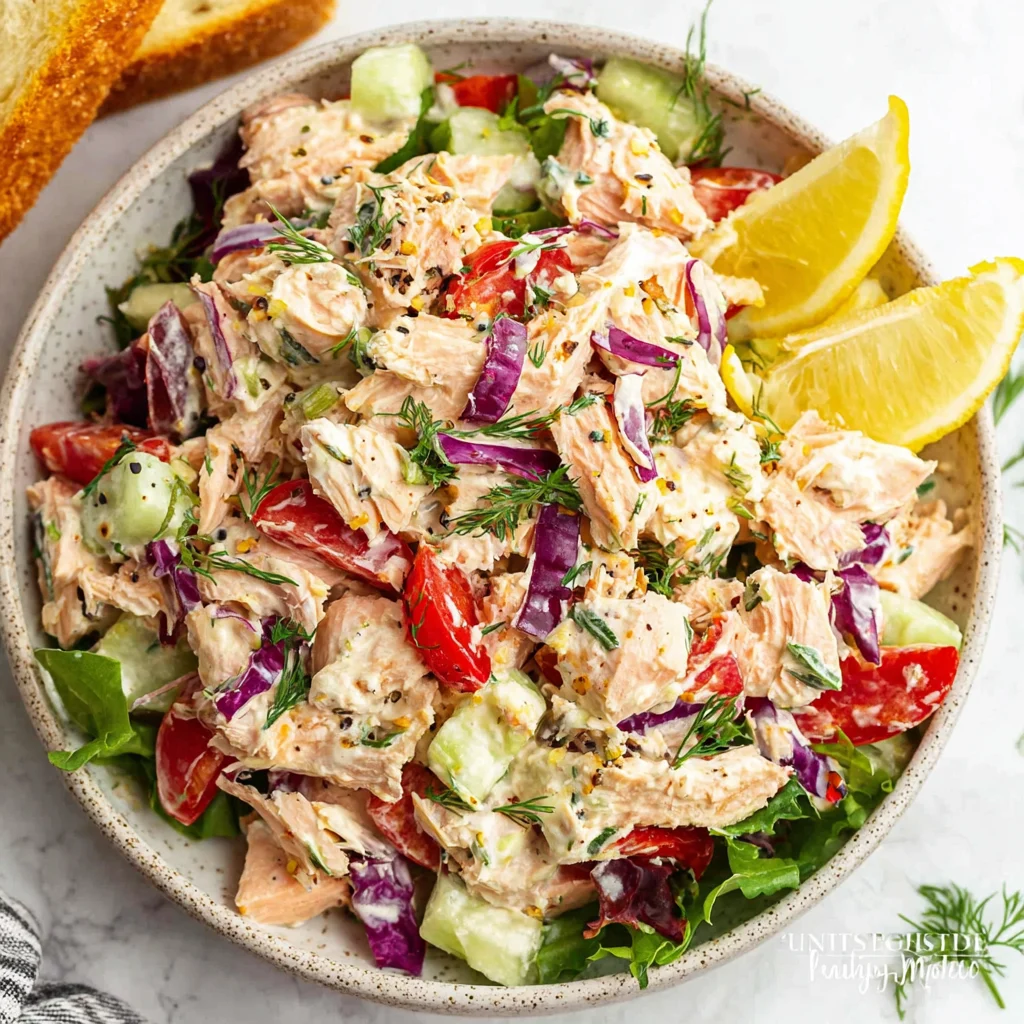
There’s something magical about the combination of flaky, tender salmon with crisp, fresh vegetables that makes every bite satisfying yet light. This salmon salad transforms simple ingredients into a restaurant-quality meal that comes together in just 15 minutes, making it perfect for busy weeknights or elegant lunch gatherings.
Ingredients List
For the Salmon:
- 1 lb fresh salmon fillets, skin removed
- 2 tablespoons olive oil
- 1 teaspoon garlic powder
- Salt and pepper to taste
For the Salad:
- 6 cups mixed greens (arugula, spinach, lettuce)
- 1 cucumber, diced
- 1 cup cherry tomatoes, halved
- 1/2 red onion, thinly sliced
- 1/4 cup capers
- 2 tablespoons fresh dill, chopped
For the Dressing:
- 3 tablespoons lemon juice
- 3 tablespoons olive oil
- 1 tablespoon Dijon mustard
- 1 teaspoon honey
Substitutions: Swap arugula for baby spinach, use lime juice instead of lemon, or replace capers with chopped olives for different flavor profiles.
Timing
- Prep Time: 10 minutes
- Cook Time: 5 minutes
- Total Time: 15 minutes
Time-Saving Tip: Prepare your dressing and chop vegetables while the salmon cooks to maximize efficiency.
How to Make It
1. Season and Heat the Pan
Pat your salmon fillets completely dry with paper towels – this ensures a beautiful golden crust. Season both sides generously with salt, pepper, and garlic powder. Heat olive oil in a large skillet over medium-high heat until it shimmers but doesn’t smoke. The right temperature prevents the fish from sticking while creating that coveted crispy exterior.
2. Cook the Salmon
Gently place salmon fillets in the hot pan, flesh-side down first. You’ll hear a satisfying sizzle – that’s the sound of perfection beginning. Cook for 2-3 minutes without moving them, allowing the proteins to set and release naturally from the pan. The edges should turn opaque and golden. Flip carefully and cook another 1-2 minutes until the internal temperature reaches 145°F. The salmon should flake easily with a fork but still feel tender.
3. Prepare the Dressing
While the salmon rests, whisk together lemon juice, olive oil, Dijon mustard, and honey in a small bowl. The mixture should emulsify into a creamy, golden dressing that coats the back of a spoon. This balance of tangy, sweet, and savory flavors will brighten every component of your salmon salad without overwhelming the delicate fish.
4. Assemble the Salad Base
Arrange your mixed greens on a large platter or individual plates, creating a colorful foundation. Scatter the diced cucumber, halved cherry tomatoes, and paper-thin red onion slices evenly across the greens. The variety of textures – crisp cucumber, juicy tomatoes, and sharp onion – creates interest in every forkful.
5. Flake and Add the Salmon
Using a fork, gently break the cooled salmon into bite-sized chunks, removing any remaining bones. The pieces should be substantial enough to provide satisfying bites but small enough to distribute evenly. Arrange the flaked salmon over the prepared vegetables, then sprinkle with capers and fresh dill for bursts of briny, herbaceous flavor.
6. Finish and Serve
Drizzle the prepared dressing evenly over the entire salad, ensuring every component gets coated. Serve immediately while the salmon is still slightly warm – this temperature contrast with the cool vegetables creates the perfect eating experience. The result is a vibrant, nutritious meal that tastes as good as it looks.
Nutritional Information
Per serving (serves 4): Approximately 285 calories, 28g protein, 8g carbohydrates, 15g healthy fats. Rich in omega-3 fatty acids, vitamins A and C, and potassium. Values are approximate and may vary based on specific ingredients used.
Serving Suggestions
Pair this salmon salad with crusty sourdough bread or whole grain crackers for added substance. A chilled glass of Sauvignon Blanc or sparkling water with lemon complements the fresh flavors beautifully. One serving provides a satisfying lunch portion, or serve alongside roasted vegetables for dinner.
Common Mistakes to Avoid
Overcooking the salmon turns it dry and tough – aim for just opaque throughout. Skipping the resting period prevents proper flaking and can result in mushy pieces. Adding dressing too early wilts the greens and makes everything soggy. Using wet salmon prevents proper browning, so always pat fillets completely dry before seasoning.
Storing Tips
Store leftover components separately in airtight containers for up to 2 days in the refrigerator. Keep the dressing separate and add just before serving to maintain freshness. The salmon can be enjoyed cold the next day, making it perfect for meal prep.
Conclusion
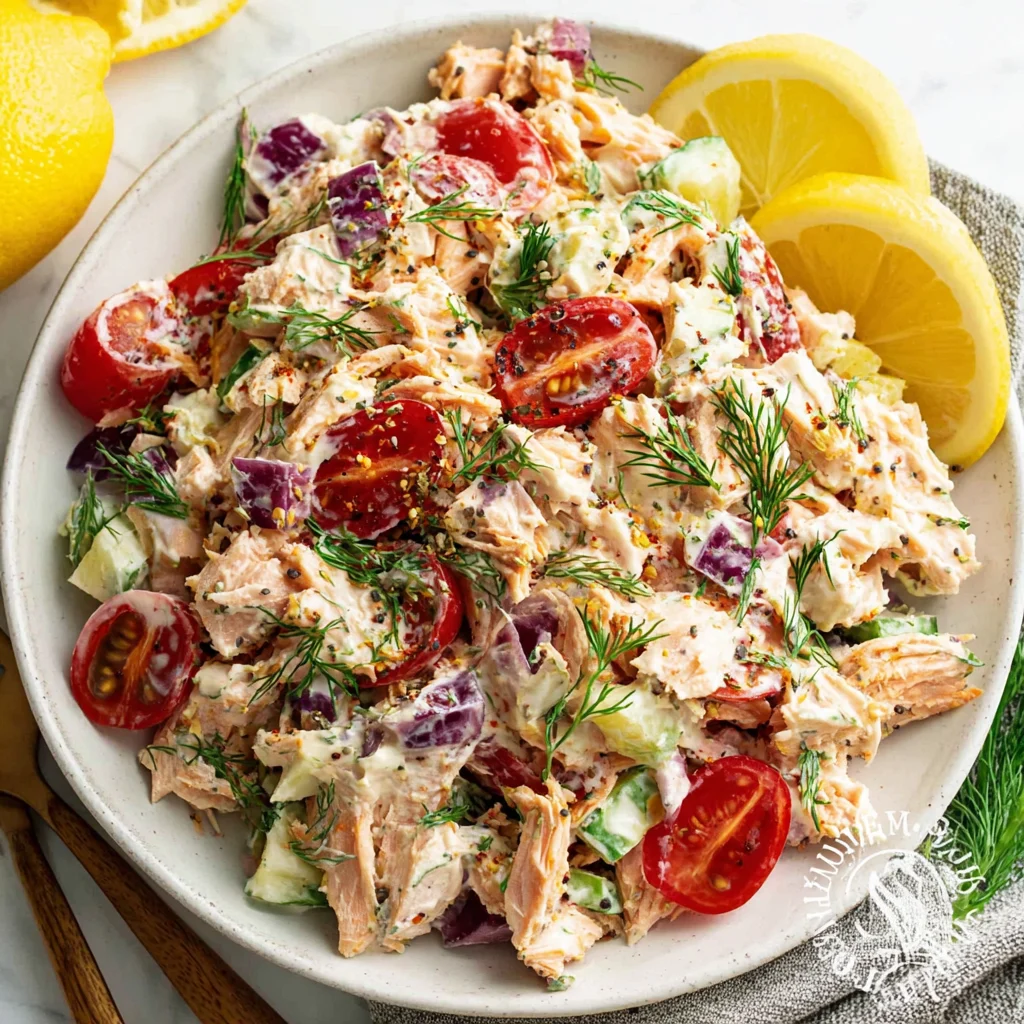
This fresh salmon salad proves that healthy eating doesn’t mean sacrificing flavor or spending hours in the kitchen. With its perfect balance of protein, vegetables, and bright dressing, it’s destined to become your go-to recipe for quick, satisfying meals. Try it tonight and let me know how it turns out!
FAQs
Can I use canned salmon instead of fresh?
Absolutely! Drain and flake 2 cans of salmon, skip the cooking step, and proceed with assembly. The flavor will be slightly different but equally delicious.
How do I know when salmon is perfectly cooked?
The salmon should flake easily with a fork and appear opaque throughout. An instant-read thermometer should register 145°F at the thickest part.
Can I make this salad ahead of time?
Prepare all components separately and assemble just before serving. This prevents wilting and maintains the best texture and flavor.
What other fish work well in this salad?
Try halibut, cod, or even grilled tuna. Adjust cooking times based on thickness, but follow the same technique for best results.
Is this salmon salad suitable for meal prep?
Yes! Store components separately in containers. The cooked salmon stays fresh for 2-3 days, making it perfect for quick assembled lunches throughout the week.
For more delicious inspiration, check out our full collection of recipe ideas on Pinterest.