
Introduction
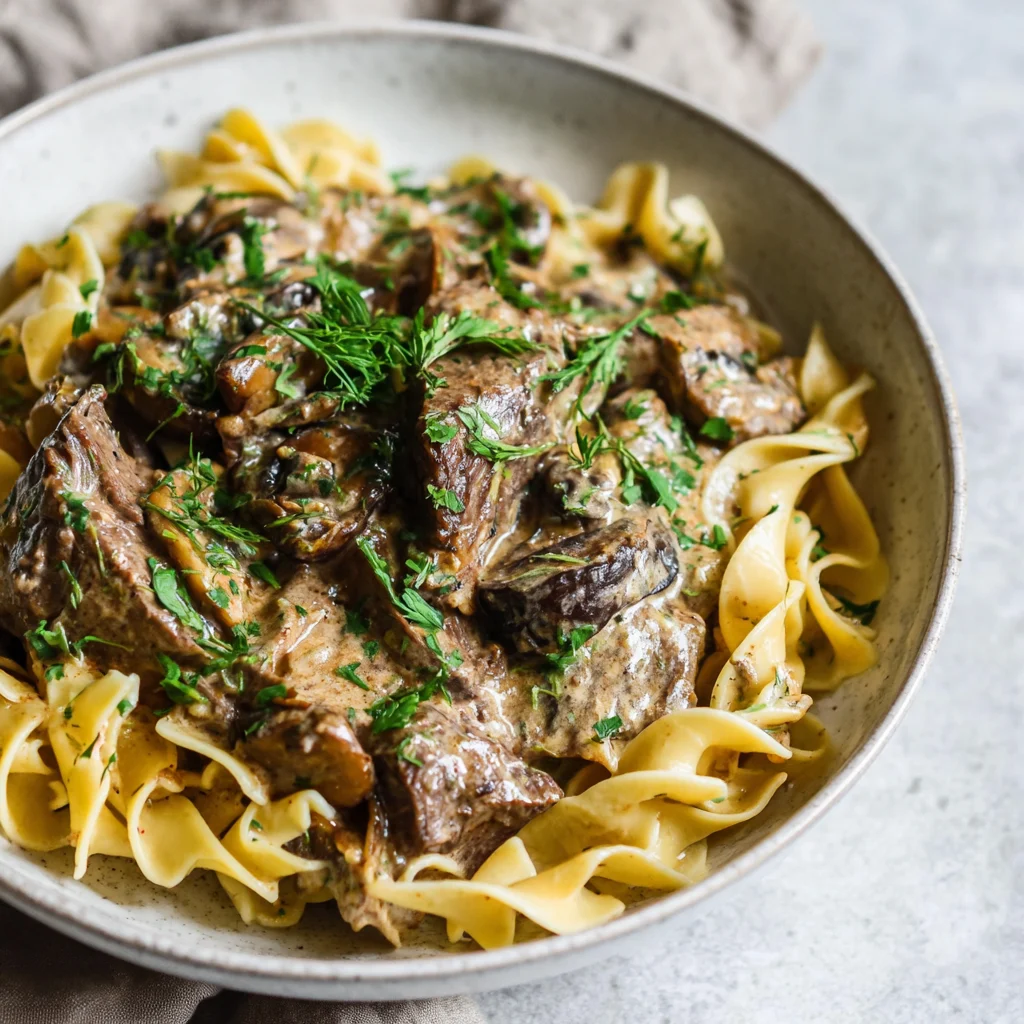
There’s something magical about walking into your home after a long day to the rich, savory aroma of beef slowly simmering in creamy sauce. This Slow Cooker Beef Stroganoff transforms tough cuts of meat into tender, melt-in-your-mouth perfection while you go about your day. What makes this crockpot beef stroganoff special is how it delivers all the comforting flavors of the classic Russian dish without requiring you to stand over the stove stirring. The slow cooking process allows the beef to become incredibly tender while the flavors meld together beautifully.
What You’ll Need
- 2 pounds beef chuck roast or stew meat, cut into 1-inch cubes
- 1 packet (1 oz) onion soup mix
- 1 can (10.75 oz) cream of mushroom soup
- 1 cup beef broth
- 8 oz sliced mushrooms (baby bella or white button)
- 1 large onion, sliced
- 3 cloves garlic, minced
- 1 cup sour cream
- 2 tablespoons cornstarch
- 12 oz egg noodles
- 2 tablespoons olive oil
- Salt and pepper to taste
- Fresh parsley for garnish
Substitutions: You can use Greek yogurt instead of sour cream for a tangier flavor, or substitute the egg noodles with rice or mashed potatoes. If you don’t have onion soup mix, use 2 tablespoons of dried minced onion with a teaspoon of garlic powder.
Timing
- Prep Time: 15 minutes
- Cook Time: 6-8 hours on low or 3-4 hours on high
- Total Time: 6 hours 15 minutes
Make-Ahead Tip: You can prep all ingredients the night before and store them in the refrigerator, then simply dump everything into your slow cooker in the morning.
How to Make It
1. Prepare the Base
Heat olive oil in a large skillet over medium-high heat. Season the beef cubes with salt and pepper, then brown them on all sides for about 5-6 minutes total. You’ll hear that satisfying sizzle as the meat hits the hot oil – this creates a beautiful caramelized exterior that adds deep flavor to your slow cooker stroganoff. The beef doesn’t need to be fully cooked, just nicely browned. This step seals in the juices and prevents the meat from becoming dry during the long cooking process.
2. Build the Flavor Foundation
Transfer the browned beef to your slow cooker. Add the sliced onions and mushrooms directly on top – no need to sauté them separately as they’ll cook perfectly in the moist environment. Sprinkle the minced garlic over everything. The mushrooms will release their earthy juices as they cook, creating an incredibly rich base for your sauce.
3. Create the Cooking Liquid
In a medium bowl, whisk together the cream of mushroom soup, beef broth, and onion soup mix until smooth. Pour this mixture over the beef and vegetables in the slow cooker. The liquid should almost cover the ingredients – this ensures even cooking and prevents the top from drying out. Give everything a gentle stir to distribute the flavors evenly.
4. Slow Cook to Perfection
Cover and cook on low for 6-8 hours or high for 3-4 hours. During the last hour, you’ll notice the most incredible aroma filling your kitchen – that’s when you know it’s nearly ready. The beef should be fork-tender and easily shred apart when properly cooked. If it still feels tough, continue cooking for another 30-60 minutes.
5. Add the Creamy Finish
In a small bowl, whisk the cornstarch with 2 tablespoons of the hot cooking liquid until smooth. Stir this slurry back into the slow cooker along with the sour cream. This thickens the sauce and creates that signature creamy texture. Cook for an additional 15-20 minutes until the sauce reaches your desired consistency. The sauce should coat the back of a spoon nicely.
6. Serve and Enjoy
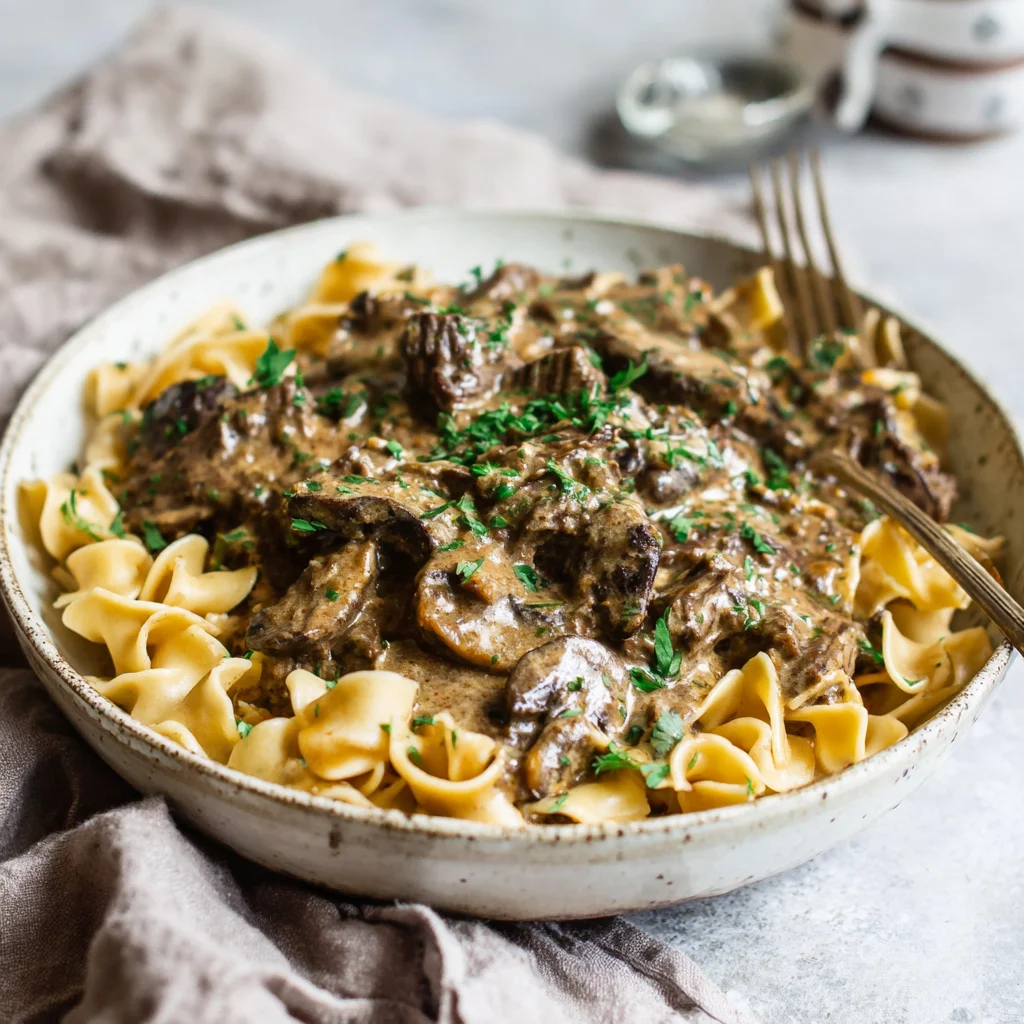
Cook your egg noodles according to package directions during the final 15 minutes of slow cooking time. Serve the beef stroganoff over the hot noodles and garnish with fresh chopped parsley for a pop of color and freshness. The contrast between the tender beef and al dente noodles creates the perfect texture combination.
Nutritional Information
Each serving contains approximately 485 calories, 32g protein, 28g carbohydrates, and 24g fat. This hearty dish provides excellent protein and iron content. Nutritional values are approximate and may vary based on specific ingredients used.
Serving Suggestions
This slow cooker beef stroganoff pairs beautifully with buttered green beans, roasted asparagus, or a simple garden salad. For presentation, serve in shallow bowls to showcase the creamy sauce. This recipe serves 6-8 people generously, making it perfect for family dinners.
Common Mistakes to Avoid
Don’t skip browning the beef – it adds crucial flavor depth. Avoid adding the sour cream too early as it can curdle from prolonged heat exposure. Resist the urge to lift the lid frequently, as this releases steam and extends cooking time. Finally, don’t overcook the egg noodles as they’ll continue to soften slightly when mixed with the hot sauce.
Storing Tips
Refrigerate leftovers in airtight containers for up to 4 days. For best results, store the stroganoff and noodles separately to prevent mushiness. Reheat gently in the microwave or on the stovetop with a splash of beef broth to restore creaminess.
Conclusion
This slow cooker beef stroganoff proves that comfort food doesn’t have to be complicated. With minimal prep and your trusty crockpot doing the work, you’ll have a restaurant-quality meal waiting for you. Give this recipe a try and let me know how it turns out!
FAQs
Can I use a different cut of beef?
Yes, beef stew meat, chuck roast, or even round steak work well. Choose cuts with good marbling for the most tender results after slow cooking.
What if my sauce is too thin?
Mix an additional tablespoon of cornstarch with cold water to create a slurry, then stir it in during the last 15 minutes of cooking.
Can I make this dairy-free?
Substitute the sour cream with cashew cream or coconut cream, and use a dairy-free cream soup alternative for similar richness.
How do I prevent the noodles from getting mushy?
Cook noodles separately and only combine them just before serving. Store leftovers with noodles and sauce separated when possible.
Can I double this recipe?
Absolutely! Just ensure your slow cooker is large enough to accommodate the increased volume without overfilling beyond the recommended capacity line.